Denmark Advances Energy Islands to Connect Massive Offshore Wind Farms Across Europe
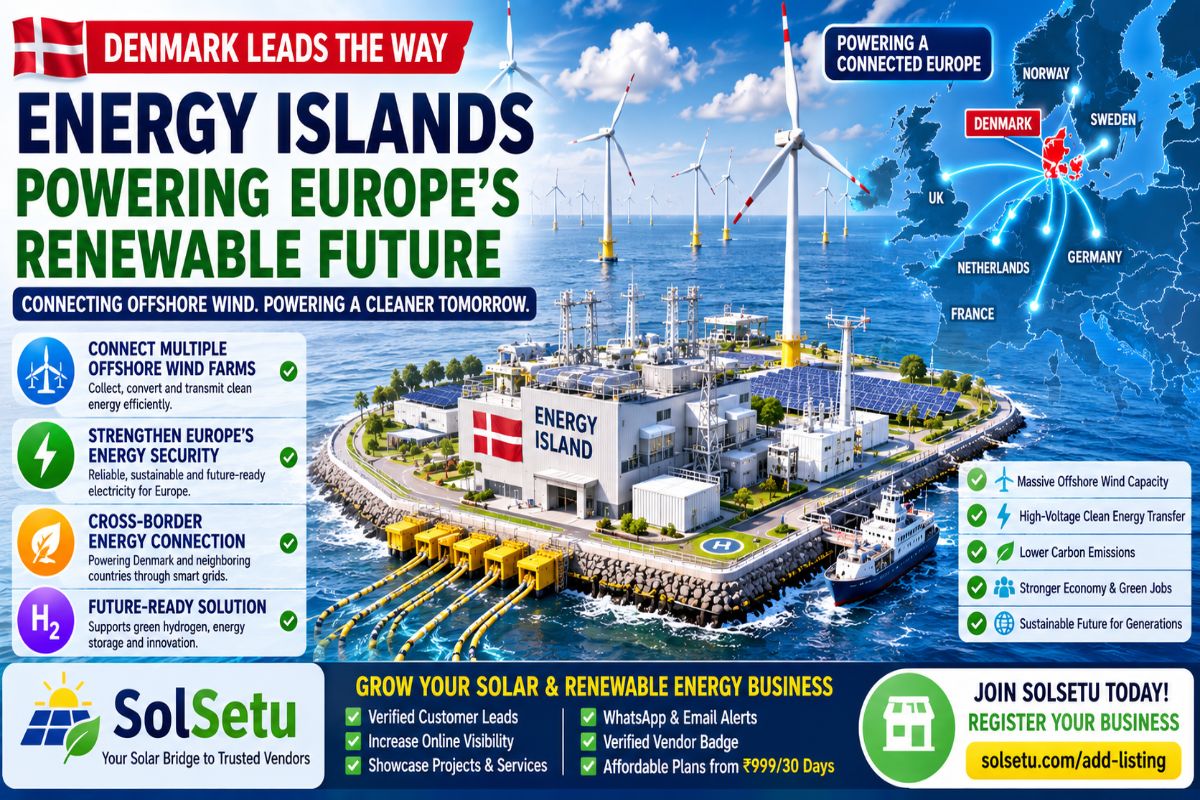
Denmark is moving forward with its ambitious Energy Islands initiative, a groundbreaking renewable energy project designed to connect multiple offshore wind farms and deliver clean electricity across Europe. The project aims to strengthen regional energy security, expand renewable electricity generation, and support Europe's transition toward a carbon-neutral future.
Energy Islands will function as offshore energy hubs that collect electricity generated by surrounding wind farms before transmitting it to Denmark and neighboring countries through high-voltage subsea cables. The innovative infrastructure is expected to become one of Europe's largest renewable energy investments over the coming decades.
📌 Key Highlights
- Development of large offshore Energy Islands.
- Connection of multiple offshore wind farms.
- Cross-border renewable electricity transmission.
- Improved European energy security.
- Supports long-term Net Zero goals.
What Are Energy Islands?
Unlike conventional offshore substations, Energy Islands are large offshore hubs capable of collecting electricity from numerous wind farms before distributing power through interconnected transmission networks. These hubs can also support future technologies including green hydrogen production and offshore energy storage.
Benefits of Energy Islands
- Higher offshore wind integration.
- More reliable electricity supply.
- Cross-border electricity trading.
- Reduced greenhouse gas emissions.
- Greater renewable energy capacity.
- Improved grid resilience.
- Supports future hydrogen production.
Why Denmark Is Leading
Denmark has decades of experience in offshore wind development and remains one of the global leaders in renewable energy innovation. Energy Islands represent the next phase of offshore energy infrastructure by enabling greater efficiency and international cooperation.
Economic Benefits
The project is expected to generate thousands of skilled jobs in engineering, marine construction, manufacturing, grid infrastructure, logistics, and renewable energy services while attracting significant domestic and international investment.
Challenges
Large-scale offshore infrastructure requires significant investment, advanced engineering, environmental assessments, and international coordination. However, long-term benefits are expected to outweigh the initial development costs.
Future Outlook
As Europe increases renewable electricity generation, Energy Islands could become a key component of the future European supergrid. Denmark's leadership may inspire similar projects in other regions seeking greater energy independence and cleaner electricity systems.
🚀 Grow Your Solar & Renewable Energy Business with SolSetu
Are you a Solar EPC Company, Installer, Dealer, Distributor, Manufacturer, EV Charging Provider, or Renewable Energy Consultant?
Join SolSetu – Your Solar Bridge to Trusted Vendors and connect with homeowners, businesses, and industries actively searching for trusted renewable energy professionals across India.
Benefits of Listing Your Business
- ✅ Verified customer enquiries
- ✅ Higher Google visibility
- ✅ Professional business profile
- ✅ Showcase products, services, certifications, and completed projects
- ✅ WhatsApp & Email lead alerts
- ✅ Verified Vendor Badge (Featured Plan)
- ✅ Priority Search Placement
- ✅ Affordable plans starting from ₹999 / 30 Days
👉 Register Today:
https://solsetu.com/add-listing/
Frequently Asked Questions (FAQ)
What are Denmark's Energy Islands?
Energy Islands are offshore energy hubs that collect electricity from multiple offshore wind farms and distribute it to Denmark and neighboring European countries.
Why are Energy Islands important?
They improve renewable energy integration, strengthen grid reliability, support cross-border electricity trade, and enhance energy security.
Can Energy Islands support green hydrogen?
Yes. Future Energy Islands may power electrolyzers that produce green hydrogen using renewable offshore wind electricity.
How do Energy Islands benefit Europe?
They improve electricity sharing, reduce dependence on fossil fuels, strengthen energy security, and support Europe's climate goals.
How can renewable energy businesses benefit from SolSetu?
Renewable energy businesses can create a professional profile, receive verified customer enquiries, increase online visibility, and connect with customers searching for solar and clean energy solutions.
Who can register on SolSetu?
Solar EPC companies, installers, dealers, distributors, manufacturers, battery suppliers, EV charging companies, and renewable energy consultants can register.
Related SolSetu Articles
- Norway Expands Green Hydrogen Projects to Power Shipping and Heavy Industry
- Sweden Expands Floating Offshore Wind Projects
- Netherlands Accelerates Offshore Wind Expansion
- Germany Expands Grid-Scale Battery Storage
Source: Danish renewable energy initiatives, offshore wind development programs, and European energy infrastructure reports.

Leave a Reply