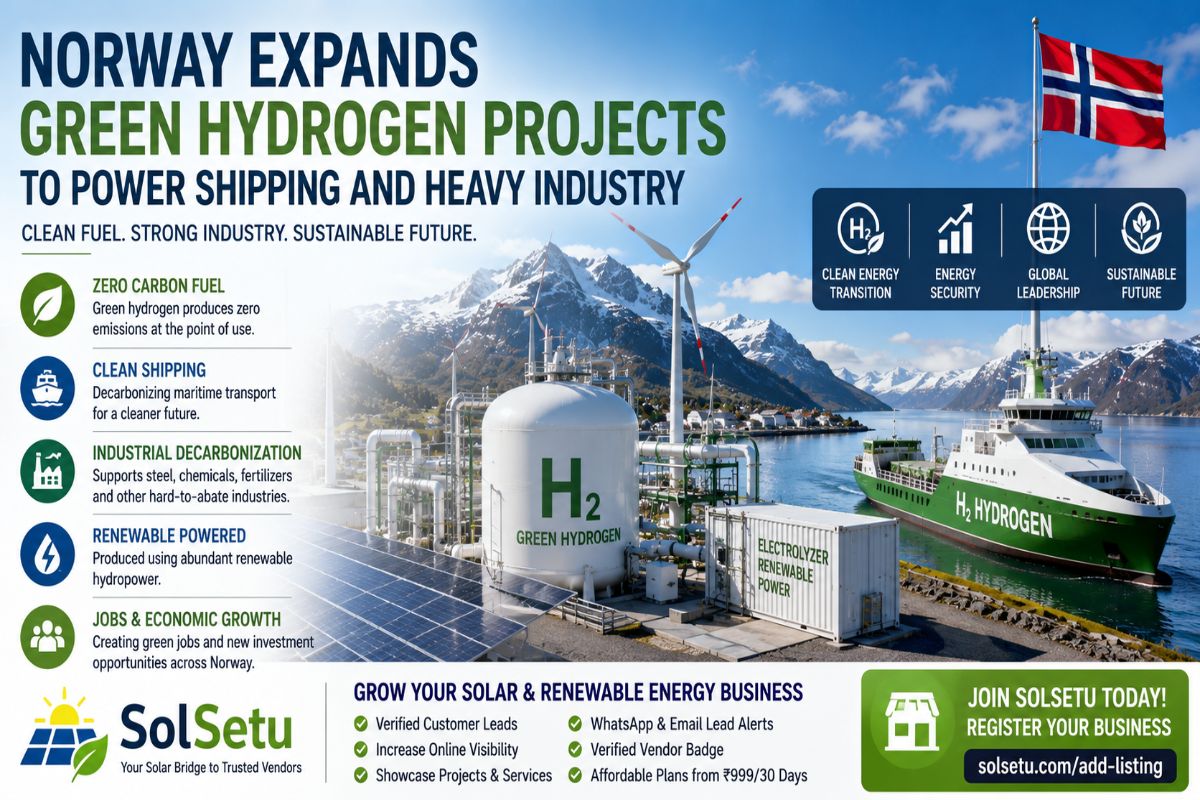
Norway Expands Green Hydrogen Projects to Power Shipping and Heavy Industry
Norway is accelerating investments in green hydrogen production as part of its strategy to decarbonize shipping, offshore energy, and heavy industries. Leveraging abundant renewable hydropower, the country is developing large-scale hydrogen projects to support its climate goals while creating new opportunities in the global clean energy economy.
Green hydrogen is produced by splitting water into hydrogen and oxygen using electricity generated from renewable sources. Unlike hydrogen produced from fossil fuels, green hydrogen generates little to no carbon emissions during production, making it one of the most promising clean fuels for sectors that are difficult to electrify.
📌 Key Highlights
- Expansion of renewable-powered hydrogen production facilities.
- Supports clean shipping and maritime transport.
- Helps decarbonize heavy industries such as steel and chemicals.
- Strengthens Norway's position in the global hydrogen economy.
- Creates new employment and investment opportunities.
Why Green Hydrogen Matters
Many industries—including shipping, steel manufacturing, fertilizer production, aviation, and long-haul transport—cannot easily switch to battery-electric systems. Green hydrogen offers a clean alternative fuel capable of reducing greenhouse gas emissions while supporting industrial growth.
Benefits of Green Hydrogen
- Produces zero carbon emissions at the point of use.
- Supports long-duration renewable energy storage.
- Reduces emissions from shipping and heavy transport.
- Improves energy security.
- Encourages renewable energy investment.
- Creates high-skilled green jobs.
Norway's Competitive Advantage
Norway has abundant renewable hydropower, advanced maritime expertise, and established energy infrastructure. These strengths position the country as one of Europe's leading producers of renewable hydrogen and a potential exporter of clean fuels.
Applications of Green Hydrogen
- Shipping and maritime transport.
- Heavy-duty trucks and buses.
- Steel manufacturing.
- Chemical and fertilizer production.
- Backup power systems.
- Long-duration renewable energy storage.
Challenges
Despite rapid progress, green hydrogen remains more expensive than conventional fuels. Continued investment in electrolyzers, renewable electricity, transportation infrastructure, and hydrogen storage will be essential to reduce costs and scale deployment.
Future Outlook
As demand for low-carbon fuels continues to grow, Norway's investments in green hydrogen are expected to strengthen its role in Europe's energy transition while supporting cleaner shipping, industry, and sustainable economic growth.
🚀 Grow Your Solar & Renewable Energy Business with SolSetu
Are you a Solar EPC Company, Installer, Dealer, Manufacturer, Distributor, EV Charging Provider, or Renewable Energy Consultant?
Join SolSetu – Your Solar Bridge to Trusted Vendors and connect with customers actively searching for trusted renewable energy professionals across India.
Benefits of Listing on SolSetu
- Receive verified customer enquiries.
- Increase your online visibility.
- Showcase your products, services, and completed projects.
- Build trust with customer reviews.
- WhatsApp & Email lead notifications.
- Verified Vendor Badge (Featured Plan).
- Priority search placement.
- Plans starting from just ₹999 for 30 days.
👉 Register Today:
https://solsetu.com/add-listing/
Frequently Asked Questions (FAQ)
What is green hydrogen?
Green hydrogen is hydrogen produced by using renewable electricity to split water into hydrogen and oxygen through electrolysis.
Why is Norway investing in green hydrogen?
Norway is investing to reduce emissions from shipping, heavy industry, and offshore operations while strengthening its renewable energy economy.
Which industries will benefit from green hydrogen?
Shipping, steel manufacturing, heavy transport, chemicals, fertilizer production, and energy storage are among the key sectors expected to benefit.
How is green hydrogen different from grey hydrogen?
Green hydrogen is produced using renewable electricity with minimal emissions, whereas grey hydrogen is produced from natural gas and releases significant carbon dioxide.
How can renewable energy businesses grow with SolSetu?
Businesses can list their company on SolSetu, receive verified customer leads, improve online visibility, showcase their expertise, and connect with customers searching for renewable energy solutions.
Who can register on SolSetu?
Solar EPC companies, installers, dealers, distributors, manufacturers, battery suppliers, EV charging providers, and renewable energy consultants can register.
Related Articles
- Sweden Expands Floating Offshore Wind Projects to Boost Renewable Energy Capacity
- Switzerland Expands Alpine Solar Projects
- Netherlands Accelerates Offshore Wind Expansion
- Japan Accelerates Perovskite Solar Cell Commercialization





Leave a Reply