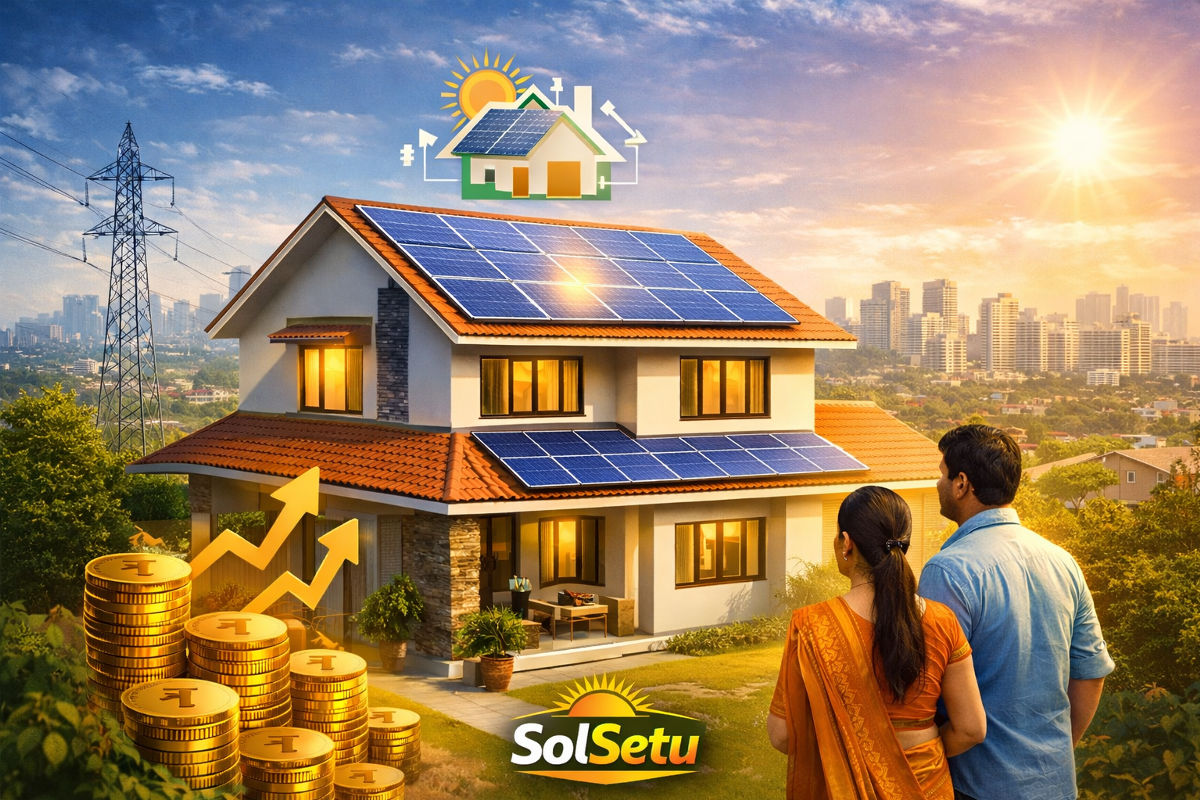
India’s Rooftop Solar Shift in 2026: How Homes Are Becoming Power Assets
Published: February 24, 2026 | Author: Girish
India’s residential energy landscape has entered a decisive phase in 2026. Rooftop solar is no longer a luxury—it is a practical infrastructure upgrade delivering long-term economic value.
From Electricity Expense to Energy Ownership
Homeowners across India are increasingly treating rooftop solar as an asset. Falling component costs, faster approvals, and stable net-metering policies have reduced payback periods significantly.
Policy Stability Driving Adoption
Clear subsidy mechanisms and improved financing access in 2026 have reinforced consumer confidence, especially among independent house owners and small residential societies.
Trusted Vendors Matter More Than Ever
As installations scale, quality, system design, and after-sales support have become decisive factors—making verified solar vendors critical to sustainable adoption.
Rooftop Solar as a Long-Term Strategy
With electricity tariffs projected to rise, rooftop solar offers predictable energy economics for 25+ years, positioning homes as micro-power assets rather than passive consumers.
The Road Ahead
The 2026 rooftop solar surge marks a structural shift. Indian households are becoming contributors to the clean energy ecosystem—reshaping how power is generated, consumed, and valued.
Explore verified solar vendors and latest solar news:
https://solsetu.com






Leave a Reply