India Developing National Roof Structural Safety Protocol for 2026 to Ensure Secure Rooftop Solar Installations
By SolSetu News Desk
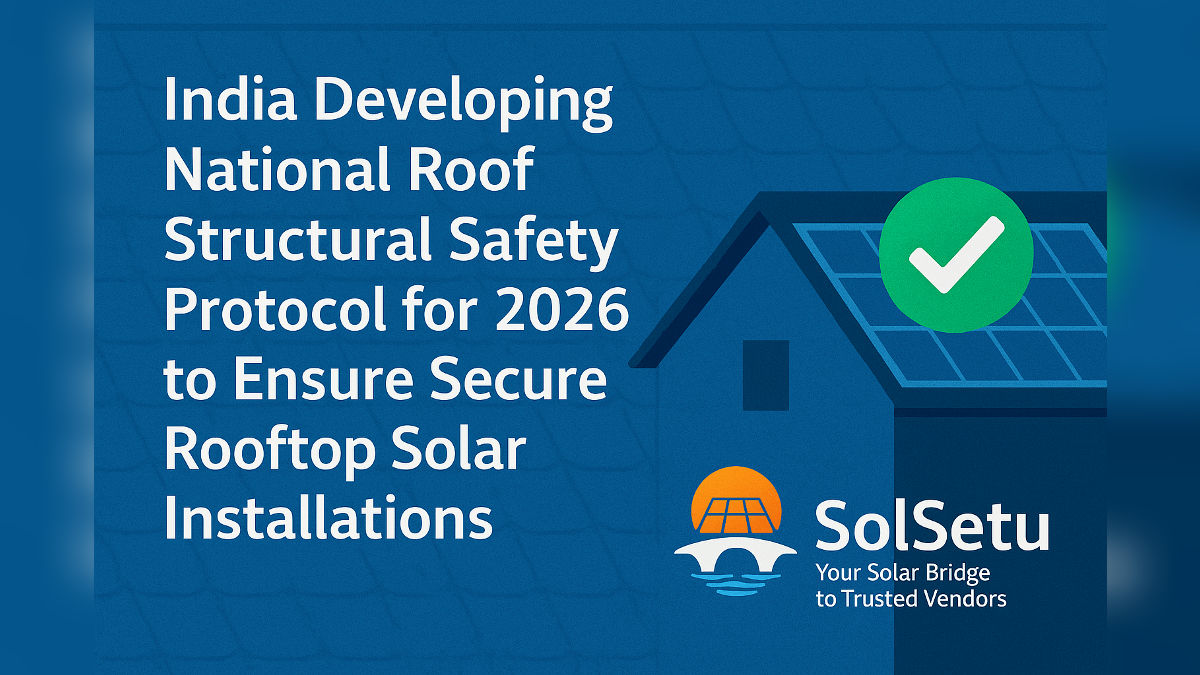
The Government of India is working on a new national framework called the Solar Roof Structural Safety Assessment Protocol (SRSSAP-2026). The policy aims to ensure that residential and commercial roofs across the country meet the structural strength requirements needed for safe rooftop solar installations. Officials involved in early consultations told SolSetu that the protocol will standardize roof evaluation practices used by installers, engineers, and DISCOMs.
With rooftop solar adoption rising sharply under the PM Surya Ghar Yojana, concerns around roof load capacity, old buildings, and improper mounting structures have prompted the government to take action.
Why SRSSAP-2026 Is Needed
Recent assessments by state agencies and EPC companies show common issues:
- Old RCC roofs with weakened bonding cannot support panel loads
- Asbestos and tin sheds collapsing under mounting pressure
- Poor-quality mounting structures causing water leakage
- Wind load risks in coastal and cyclone-prone regions
- Heat stress causing cracks in lightweight roofs
The protocol aims to prevent safety hazards and expensive structural damage for homeowners.
What SRSSAP-2026 Will Include
The framework is expected to mandate:
- Pre-installation roof strength evaluation checklist
- Wind load zone classification for mounting structure selection
- Minimum RCC thickness guidelines for rooftop systems
- Mandatory engineer certification for old buildings
- Standard drilling & waterproofing methods
- Heat-load stress mitigation practices
- Special provisions for tin roofs, sheds, and asbestos sheets
EPC companies may be required to upload roof assessment reports to a national portal as part of the approval process.
Benefits for Consumers
The protocol will help consumers:
- Prevent long-term roof damage or leakage
- Ensure the mounting structure is safe and compliant
- Identify whether their roof is fit for solar installation
- Receive safer installations backed by engineering checks
- Reduce risk during cyclones, storms, and heavy rainfall
Structural safety is becoming as important as component quality in India’s rooftop solar transition.
Rollout Timeline
The protocol may begin pilot implementation in 2026 in states with high rooftop solar density:
- Maharashtra
- Gujarat
- Tamil Nadu
- Karnataka
- Rajasthan
Nationwide implementation is expected by the end of 2026.
SolSetu will publish updates as the government finalizes SRSSAP-2026 design and implementation guidelines.





Leave a Reply