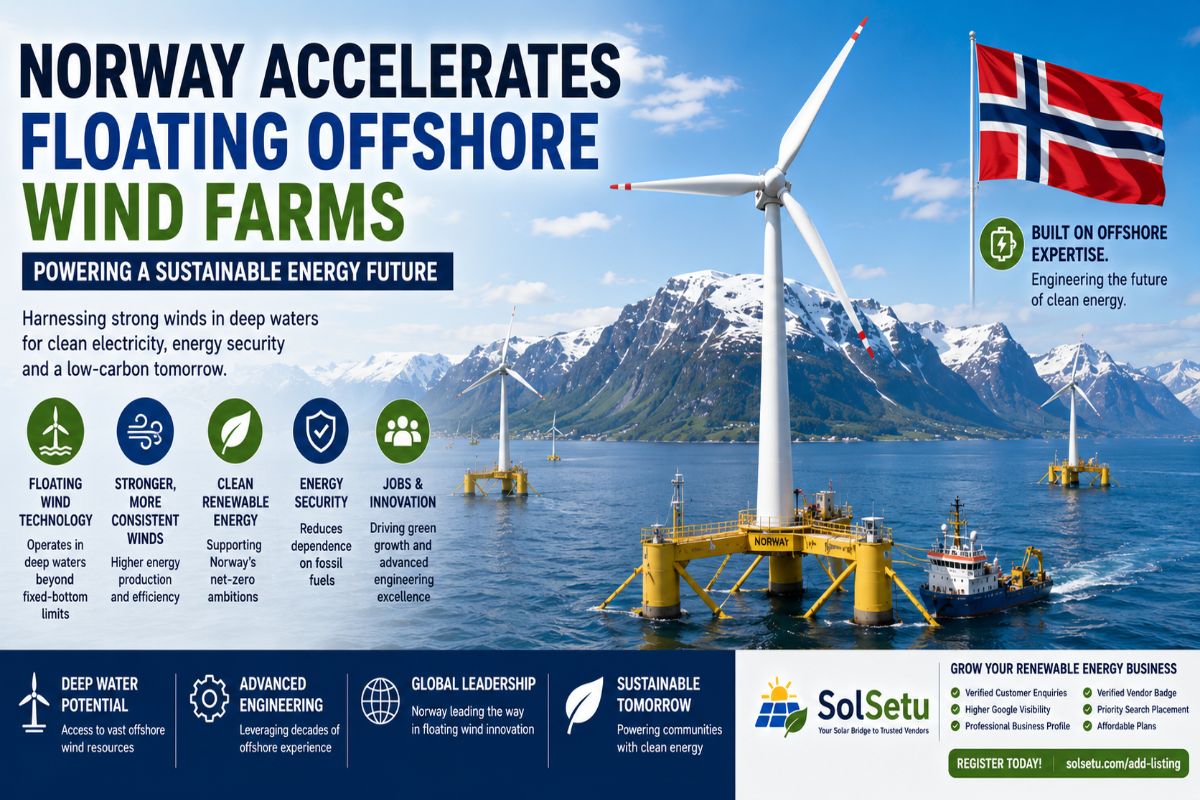
Norway Accelerates Floating Offshore Wind Farms for a Sustainable Energy Future
Norway is accelerating the deployment of floating offshore wind farms to unlock renewable energy generation in deep-water regions where conventional fixed-bottom wind turbines are not feasible. By combining decades of offshore engineering expertise with modern renewable energy technologies, Norway is positioning itself as a global leader in floating wind innovation.
Floating offshore wind platforms allow turbines to operate farther from the coastline, where wind speeds are stronger and more consistent. This increases electricity generation while reducing visual impact and expanding renewable energy opportunities in deeper ocean environments.
📌 Key Highlights
- Expansion of floating offshore wind farms.
- Harnesses stronger deep-water wind resources.
- Supports low-carbon electricity generation.
- Utilizes Norway's offshore engineering expertise.
- Strengthens long-term energy security.
What Is Floating Offshore Wind?
Floating offshore wind uses wind turbines mounted on floating platforms anchored to the seabed. Unlike traditional offshore wind farms that require fixed foundations, floating systems can operate in water depths exceeding several hundred meters, making them suitable for many coastal regions worldwide.
Benefits of Floating Offshore Wind
- Access to stronger and more consistent winds.
- Higher renewable electricity generation.
- Reduced dependence on fossil fuels.
- Expands renewable energy development into deep waters.
- Lower visual impact from shore.
- Supports green industrial development.
- Creates skilled engineering and marine jobs.
Engineering Innovation
Norway's offshore oil and gas industry has developed advanced expertise in floating structures, subsea engineering, marine operations, and harsh-environment construction. These capabilities are now supporting the development of next-generation floating offshore wind technologies.
Economic Opportunities
Floating offshore wind projects create opportunities for EPC contractors, turbine manufacturers, floating platform developers, cable manufacturers, marine engineering companies, shipyards, digital monitoring providers, and renewable energy investors.
Future Outlook
As floating wind technology becomes more cost-effective, Norway is expected to expand commercial-scale projects while exporting engineering expertise to renewable energy markets around the world. Floating offshore wind is anticipated to become a major contributor to global clean electricity generation over the coming decades.
🚀 Grow Your Solar & Renewable Energy Business with SolSetu
Are you a Solar EPC Company, Installer, Dealer, Distributor, Manufacturer, Offshore Wind Equipment Supplier, Battery Supplier, EV Charging Company, or Renewable Energy Consultant?
Join SolSetu – Your Solar Bridge to Trusted Vendors and connect with customers actively searching for trusted renewable energy professionals across India.
Benefits of Listing on SolSetu
- ✅ Verified customer enquiries.
- ✅ Higher Google visibility.
- ✅ Professional business profile.
- ✅ Showcase products, services, certifications, and completed projects.
- ✅ WhatsApp & Email lead alerts.
- ✅ Verified Vendor Badge.
- ✅ Priority Search Placement.
- ✅ Affordable plans starting from ₹999 for 30 Days.
👉 Register Your Business Today:
https://solsetu.com/add-listing/
Frequently Asked Questions (FAQ)
What is floating offshore wind?
Floating offshore wind uses turbines installed on floating platforms anchored to the seabed, enabling electricity generation in deep-water locations.
Why is Norway investing in floating offshore wind?
Norway is using its offshore engineering expertise to expand renewable electricity production, reduce emissions, and develop a globally competitive floating wind industry.
How is floating offshore wind different from conventional offshore wind?
Traditional offshore wind turbines are fixed to the seabed, while floating wind turbines are mounted on floating platforms, allowing deployment in much deeper waters.
What are the advantages of floating offshore wind farms?
They can access stronger winds, increase electricity generation, reduce visual impact from shore, and expand renewable energy development into deeper ocean areas.
Who can register on SolSetu?
Solar EPC companies, offshore wind suppliers, renewable energy consultants, installers, manufacturers, battery suppliers, and distributors can create a professional business profile.
How can SolSetu help renewable energy businesses?
SolSetu helps businesses receive verified customer enquiries, improve Google visibility, showcase completed projects, and connect with customers searching for renewable energy solutions.
Related SolSetu Articles
- United States Accelerates Direct Air Carbon Capture Powered by Renewable Energy
- Japan Expands Perovskite Solar Cell Technology for Next-Generation Clean Energy
- Netherlands Expands Offshore Solar Farms to Complement North Sea Wind Energy
- Canada Accelerates Grid Modernization and Long-Duration Energy Storage
Source: Offshore wind industry developments, renewable energy programs, floating wind technology initiatives, and clean energy sector reports.



Leave a Reply