South Korea Accelerates Vehicle-to-Grid Technology for Smarter Renewable Energy Integration
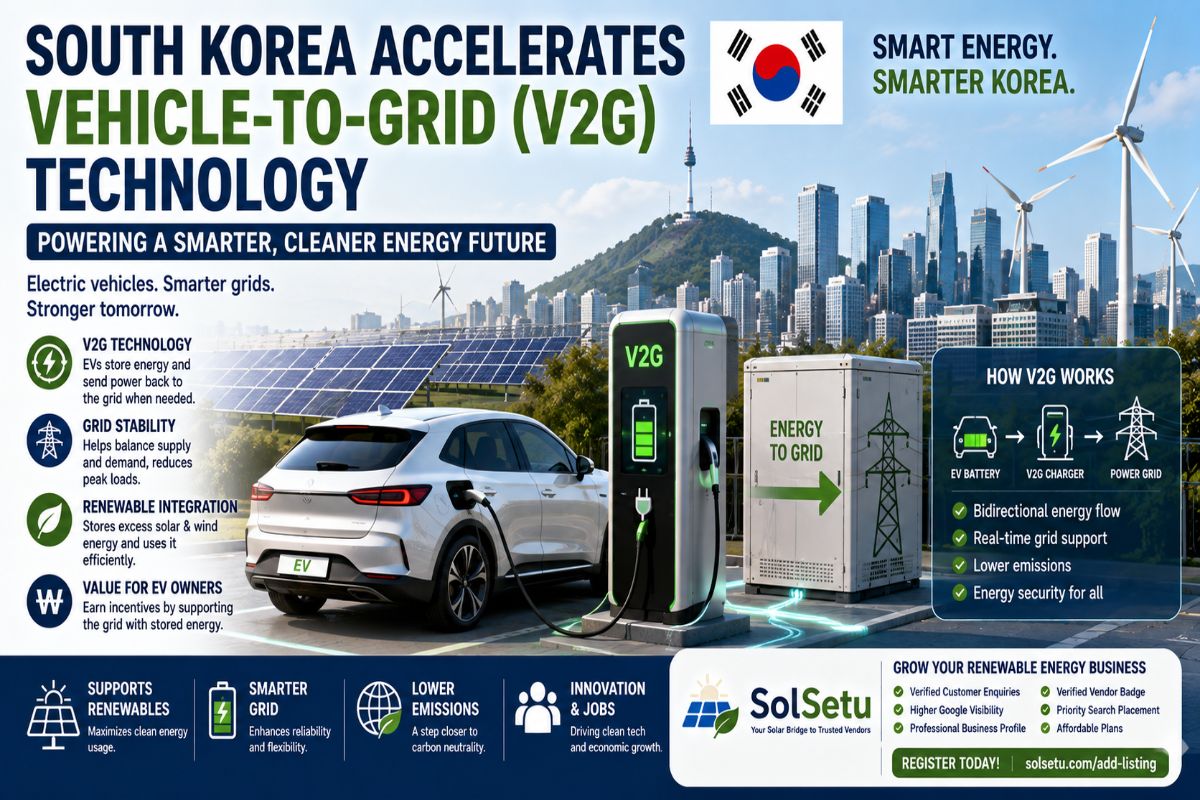
South Korea is investing in Vehicle-to-Grid (V2G) technology to transform electric vehicles into mobile energy storage systems. By enabling EV batteries to both charge from and supply electricity back to the grid, the country is improving renewable energy integration, enhancing grid flexibility, and supporting its long-term carbon neutrality objectives.
As the adoption of electric vehicles continues to grow, V2G technology allows parked EVs to store renewable electricity during periods of high generation and return power to the grid when electricity demand increases. This creates a more resilient and efficient electricity system.
📌 Key Highlights
- Expansion of Vehicle-to-Grid (V2G) infrastructure.
- Supports renewable energy integration.
- Improves electricity grid stability.
- Creates value for EV owners.
- Strengthens South Korea's clean energy transition.
What Is Vehicle-to-Grid (V2G)?
Vehicle-to-Grid is a smart energy technology that allows electric vehicles to communicate with the electricity grid. Instead of acting only as electricity consumers, EVs can temporarily return stored electricity from their batteries to support the grid during peak demand or emergencies.
Benefits of V2G Technology
- Improves renewable energy utilization.
- Reduces peak electricity demand.
- Supports smart grid operations.
- Provides backup power during emergencies.
- Creates additional income opportunities for EV owners.
- Reduces dependence on fossil-fuel power generation.
- Enhances national energy security.
Role in Renewable Energy
Renewable energy sources such as solar and wind generate electricity based on weather conditions. V2G helps balance these fluctuations by storing excess renewable electricity in EV batteries and returning it when demand increases, improving grid reliability.
Economic Opportunities
The expansion of Vehicle-to-Grid technology creates opportunities for EV manufacturers, battery companies, charging infrastructure providers, software developers, utilities, EPC contractors, and smart grid technology companies.
Future Outlook
With increasing electric vehicle adoption and continued investment in renewable energy, South Korea is expected to expand V2G deployment across residential, commercial, and public charging networks. This technology is likely to become a key component of future smart energy systems worldwide.
🚀 Grow Your Solar & Renewable Energy Business with SolSetu
Are you a Solar EPC Company, EV Charging Provider, Battery Manufacturer, Renewable Energy Consultant, Installer, Dealer, Distributor, or Smart Grid Technology Company?
Join SolSetu – Your Solar Bridge to Trusted Vendors and connect with homeowners, businesses, industries, and government organizations actively searching for trusted renewable energy professionals across India.
Benefits of Listing on SolSetu
- ✅ Verified customer enquiries.
- ✅ Higher Google visibility.
- ✅ Professional business profile.
- ✅ Showcase products, services, certifications, and completed projects.
- ✅ WhatsApp & Email lead alerts.
- ✅ Verified Vendor Badge.
- ✅ Priority Search Placement.
- ✅ Affordable plans starting from ₹999 for 30 Days.
👉 Register Your Business Today:
https://solsetu.com/add-listing/
Frequently Asked Questions (FAQ)
What is Vehicle-to-Grid (V2G)?
Vehicle-to-Grid is a technology that enables electric vehicles to both receive electricity from and return electricity to the power grid.
How does V2G support renewable energy?
V2G stores excess electricity generated by solar and wind power in EV batteries and supplies it back to the grid when demand increases.
Can EV owners benefit financially from V2G?
Depending on local regulations and utility programs, EV owners may receive incentives or payments for providing electricity to the grid.
Why is South Korea investing in V2G technology?
South Korea aims to improve grid flexibility, support renewable energy integration, reduce emissions, and strengthen energy security.
Who can register on SolSetu?
Solar EPC companies, EV charging providers, battery manufacturers, renewable energy consultants, installers, and distributors can register on SolSetu.
How can SolSetu help renewable energy businesses?
SolSetu helps businesses receive verified customer enquiries, improve online visibility, showcase products and completed projects, and connect with customers looking for renewable energy solutions.
Related SolSetu Articles
- Norway Accelerates Floating Offshore Wind Farms for a Sustainable Energy Future
- United States Accelerates Direct Air Carbon Capture Powered by Renewable Energy
- Japan Expands Perovskite Solar Cell Technology for Next-Generation Clean Energy
- Canada Accelerates Grid Modernization and Long-Duration Energy Storage
Source: Smart grid initiatives, EV charging technology developments, renewable energy integration programs, and Vehicle-to-Grid industry reports.



Leave a Reply