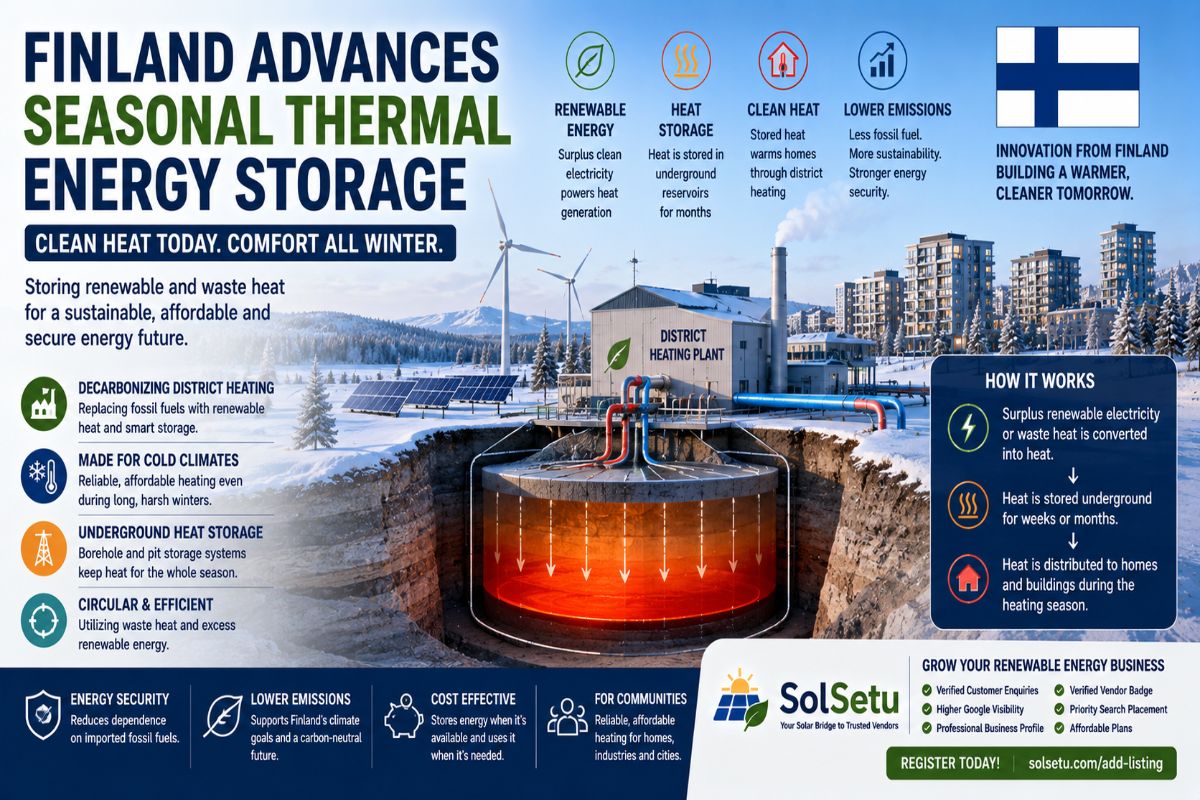
Finland Advances Seasonal Thermal Energy Storage for Cleaner District Heating
Finland is advancing large-scale thermal energy storage as part of its transition toward cleaner district heating. By storing surplus heat from renewable energy, waste heat and other sources, thermal storage can help Finland balance seasonal heating demand and reduce reliance on carbon-intensive heating during winter.
District heating is particularly important in Finland, where cold winters create substantial heating demand. Finnish Energy says district heating is the country's most common form of heating and that more than 60% of district heat production is already classified as zero-emission. Seasonal heat storage is among the technologies being explored to further decarbonize the sector.
📌 Key Highlights
- Finland is developing large-scale thermal energy storage solutions.
- Stored heat can help meet winter heating demand.
- Renewable electricity and waste heat can be converted into useful stored heat.
- Thermal storage can complement heat pumps and renewable energy.
- Underground and borehole storage technologies are being investigated.
What Is Seasonal Thermal Energy Storage?
Seasonal Thermal Energy Storage (STES) stores heat for long periods so that energy produced during one season can be used during another. For example, surplus heat available during summer can potentially be stored underground and recovered during the winter heating season.
Technologies include borehole thermal energy storage, underground water reservoirs, rock caverns and other large-scale thermal storage systems.
Why Thermal Storage Matters in Finland
Finland has a large district-heating network and significant seasonal variation in heating demand. This creates an opportunity to store excess heat instead of allowing it to go unused.
Research in Finland has examined the use of seasonal thermal storage to capture excess heat from sources including data centres and industrial facilities. One Aalto University study investigated aquifer and borehole thermal energy storage for using data-centre excess heat in district heating systems.
Renewable Electricity Can Become Renewable Heat
Thermal storage can also help integrate renewable electricity. When electricity from wind or solar is abundant and prices are low, electric heating systems can convert that electricity into heat and store it for later use.
This creates an important connection between the electricity and heating sectors. Instead of storing all surplus renewable electricity in electrochemical batteries, some energy can be converted into heat and stored in inexpensive thermal materials or underground systems.
Finland's Sand Battery Innovation
Finland has also attracted international attention for sand-based thermal energy storage. These systems use electrically heated material to store energy as heat, which can later be supplied to district heating networks.
The approach demonstrates how long-duration energy storage does not always have to mean storing electricity in a conventional battery. For communities with district heating networks, storing energy directly as heat can be a practical solution.
Benefits of Seasonal Thermal Energy Storage
- Reduces dependence on fossil-based heating.
- Stores surplus renewable energy for later use.
- Improves utilization of waste heat.
- Supports renewable electricity integration.
- Can reduce winter peak heating requirements.
- Provides long-duration energy storage.
- Can complement heat pumps and district heating networks.
Challenges
Large-scale thermal storage still faces challenges, including high upfront investment, heat losses, site selection, system design and integration with existing district heating infrastructure. Finnish researchers and industry are working on improving the technical and economic performance of these systems.
Future Outlook
Finland's combination of extensive district heating infrastructure, renewable electricity and cold-weather heating demand makes thermal energy storage particularly relevant. As renewable energy deployment increases, seasonal storage could become an important tool for matching energy supply with winter heating demand.
The country's experience could also provide valuable lessons for other cold-climate markets looking to decarbonize district heating while maintaining reliable and affordable heat supplies.
🚀 Grow Your Solar & Renewable Energy Business with SolSetu
Are you a Solar EPC Company, Battery Storage Provider, Heat Pump Company, Energy Storage Developer, EV Charging Provider, Renewable Energy Consultant, Manufacturer, Installer, Dealer or Distributor?
Join SolSetu – Your Solar Bridge to Trusted Vendors and increase your online visibility while connecting with customers searching for renewable energy solutions across India.
Benefits of Listing on SolSetu
- ✅ Verified customer enquiries
- ✅ Higher Google visibility
- ✅ Professional business profile
- ✅ Showcase products, projects and certifications
- ✅ WhatsApp & Email lead alerts
- ✅ Verified Vendor Badge
- ✅ Priority Search Placement
- ✅ Plans starting from ₹999 for 30 Days
👉 Register Your Business Today:
https://solsetu.com/add-listing/
Frequently Asked Questions (FAQ)
What is seasonal thermal energy storage?
Seasonal thermal energy storage stores heat for long periods, potentially allowing heat generated during warmer months or periods of excess energy to be used during colder periods.
Why is thermal energy storage important for Finland?
Finland has substantial seasonal heating demand, making long-duration heat storage useful for balancing renewable energy supply and winter heating requirements.
Can solar and wind energy be stored as heat?
Yes. Surplus renewable electricity can be converted into heat using electric heating systems and stored in thermal storage systems for later use.
What is a sand battery?
A sand battery is a thermal energy storage system that stores energy as heat in a solid material and later supplies that heat for applications such as district heating.
Can thermal storage replace lithium-ion batteries?
Thermal storage and electrochemical batteries serve different purposes. Thermal storage is particularly useful when the end use is heating, while batteries are better suited to applications requiring electricity directly.
Who can register on SolSetu?
Solar companies, energy-storage providers, heat-pump companies, renewable energy consultants, manufacturers, installers, dealers and distributors can create a business listing on SolSetu.
How can SolSetu help renewable energy businesses?
SolSetu helps renewable energy businesses improve online visibility, showcase their products and projects, and receive customer enquiries from people searching for clean-energy solutions.
Related SolSetu Articles
- South Korea Accelerates Vehicle-to-Grid Technology for Smarter Renewable Energy Integration
- Norway Accelerates Floating Offshore Wind Farms for a Sustainable Energy Future
- United States Accelerates Direct Air Carbon Capture Powered by Renewable Energy
- Iceland Accelerates Green Methanol Production to Support Sustainable Shipping



Leave a Reply