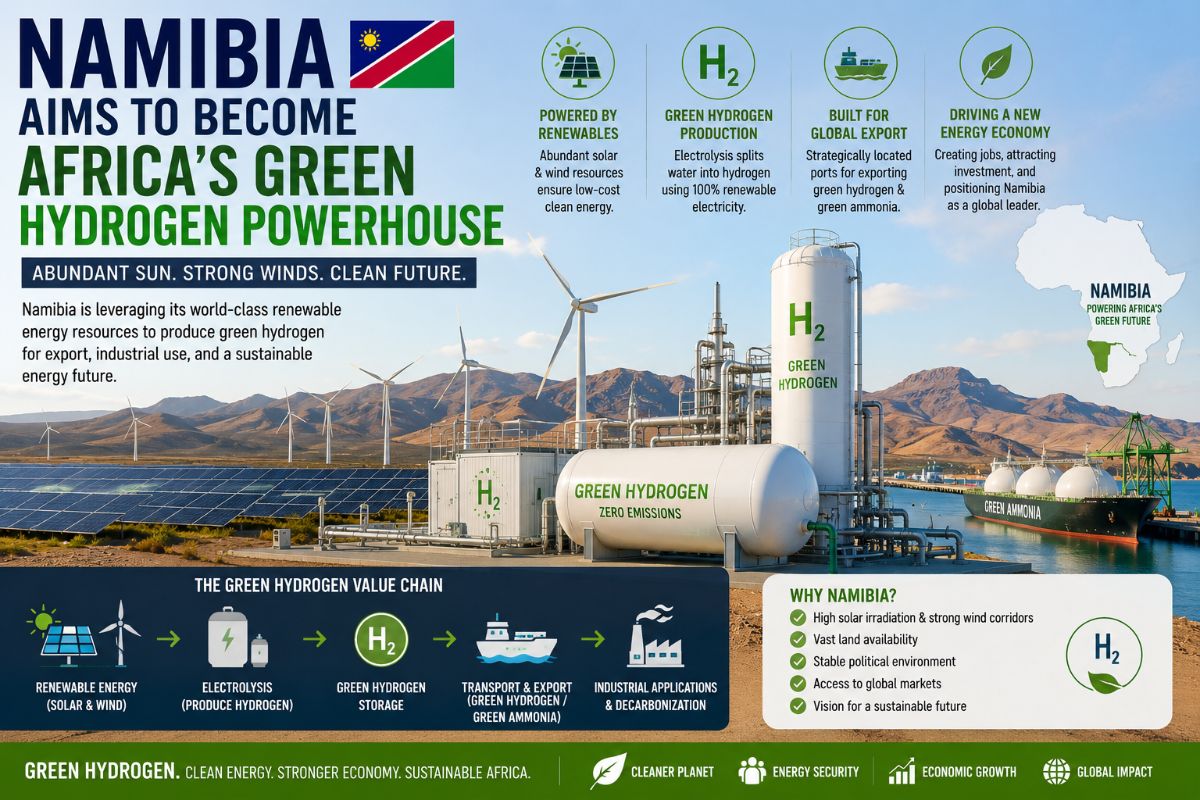
Namibia Aims to Become Africa's Green Hydrogen Powerhouse
Namibia is positioning itself as one of the world's most promising green hydrogen producers by leveraging its exceptional solar irradiation, strong coastal wind resources, and vast land availability. The country aims to produce clean hydrogen using renewable electricity, supporting industrial decarbonization while creating new export opportunities and attracting international investment.
Green hydrogen is produced through electrolysis, a process that uses renewable electricity to split water into hydrogen and oxygen without generating carbon emissions. Unlike hydrogen produced from fossil fuels, green hydrogen offers a cleaner alternative for industries such as steel manufacturing, shipping, aviation, fertilizers, and heavy transport that are difficult to electrify directly.
With major renewable energy projects under development and growing interest from global investors, Namibia is emerging as a strategic destination in the global hydrogen economy.
Why Namibia Is Ideal for Green Hydrogen
- Excellent solar radiation throughout the year.
- Strong coastal wind resources.
- Large areas of available land for renewable energy projects.
- Access to Atlantic shipping routes for exports.
- Government support for renewable energy investment.
- Potential to produce green ammonia for international markets.
How Green Hydrogen Is Produced
Renewable electricity generated from solar and wind farms powers electrolyzers that split purified water into hydrogen and oxygen. The hydrogen is then compressed, stored, or converted into green ammonia for easier transportation and export to international markets.
Because the electricity used comes from renewable sources, the entire production process significantly reduces greenhouse gas emissions compared to conventional hydrogen production.
Frequently Asked Questions
What is green hydrogen?
Green hydrogen is hydrogen produced using renewable electricity through electrolysis, making it one of the cleanest forms of hydrogen available.
Why is Namibia investing in green hydrogen?
Namibia has abundant solar and wind resources, making it an ideal location for producing low-cost renewable electricity needed for green hydrogen production. The sector also offers opportunities for exports, job creation, and economic diversification.
How is green hydrogen different from grey and blue hydrogen?
Grey hydrogen is produced using fossil fuels and releases carbon emissions. Blue hydrogen also relies on fossil fuels but captures part of the carbon dioxide. Green hydrogen is produced using renewable energy and has the lowest carbon footprint.
Can green hydrogen replace fossil fuels?
Green hydrogen can help replace fossil fuels in sectors such as heavy industry, shipping, aviation, fertilizer production, and long-duration energy storage where direct electrification is challenging.
Why is green ammonia important?
Green hydrogen can be converted into green ammonia, which is easier to transport and store. It is used in fertilizers, shipping fuel, and industrial applications.
Which countries are leading green hydrogen development?
Countries including Namibia, Australia, Saudi Arabia, the United Arab Emirates, Chile, Germany, Japan, and India are investing heavily in green hydrogen infrastructure.
Can India become a green hydrogen leader?
Yes. Through the National Green Hydrogen Mission, India is expanding renewable energy capacity and developing domestic hydrogen production to support exports and industrial decarbonization.
What industries will benefit from green hydrogen?
Steel manufacturing, cement production, chemicals, fertilizers, shipping, aviation, mining, and heavy transportation are expected to benefit significantly from green hydrogen.
Recommended Renewable Energy Products

WAAREE II 580-585W TOPCon Bifacial Solar Panel (Pack of 2)
High-efficiency TOPCon bifacial solar panels designed for utility-scale renewable energy projects.

Loom Solar Shark 600W TOPCon Bifacial Panel
Advanced photovoltaic technology suitable for commercial and industrial solar installations.

Luminous NXG 1450e Solar Inverter
Reliable solar inverter supporting efficient renewable electricity generation.
Copper Lightning Arrester
Provides reliable protection for renewable energy plants, hydrogen production facilities, and electrical substations.
Earthing Electrode
Professional grounding solution for solar farms, hydrogen plants, industrial facilities, and utility-scale renewable energy systems.
Affiliate Disclosure: This article contains affiliate links. SolSetu may earn a commission from qualifying purchases at no additional cost to buyers.
Future Outlook
As global demand for low-carbon fuels grows, Namibia has the potential to become one of Africa's leading exporters of green hydrogen and green ammonia. Continued investment in renewable energy infrastructure, port facilities, and electrolyzer technology could strengthen the country's position in the global clean energy economy while contributing to international decarbonization efforts.




Leave a Reply