How Is Germany Combining Farming and Solar Energy Through Agrivoltaics?
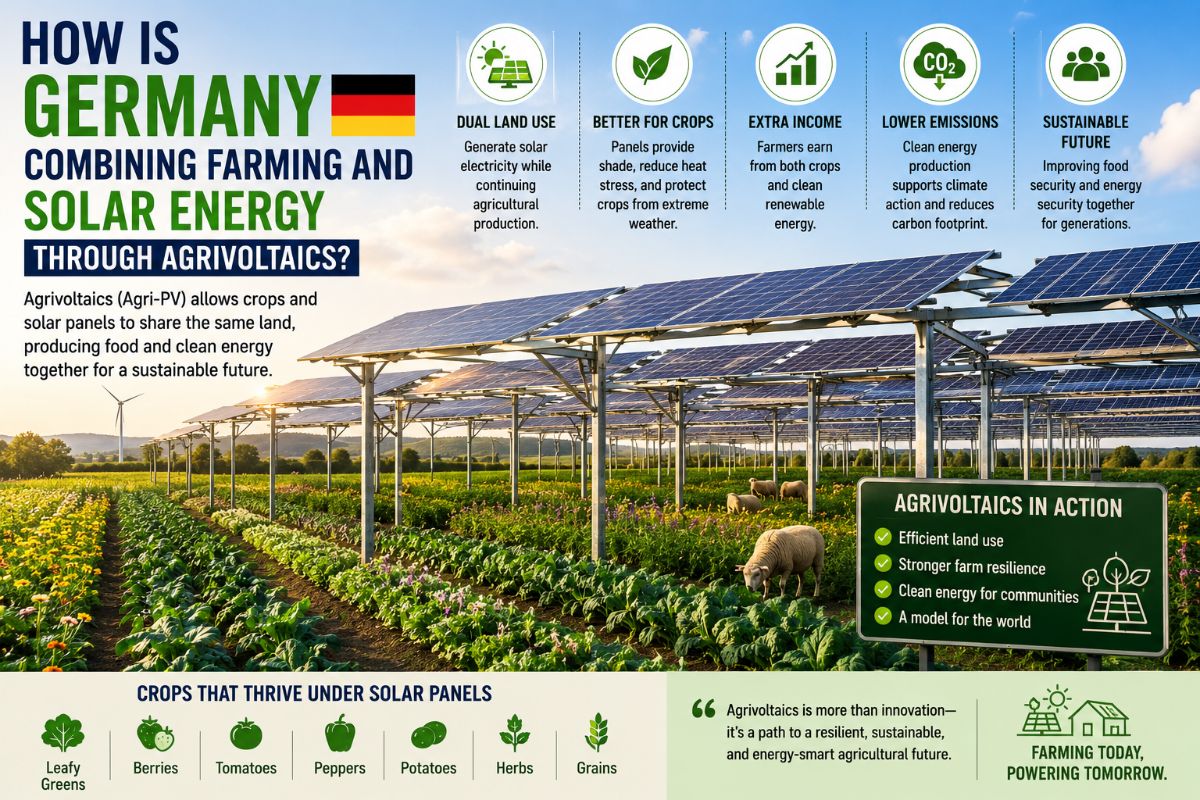
Germany is leading the development of agrivoltaics (Agri-PV), an innovative approach that allows crops and solar panels to share the same farmland. Instead of choosing between agriculture and renewable energy, agrivoltaic systems enable farmers to grow food while simultaneously generating clean electricity from solar panels installed above or alongside crops.
As climate change increases the frequency of droughts and heatwaves, agrivoltaics offers an effective solution by providing partial shade that helps reduce water evaporation, protects sensitive crops from extreme weather, and creates an additional source of income through solar power generation.
Germany's growing investment in agrivoltaic projects demonstrates how renewable energy and agriculture can work together to improve food security, support rural economies, and accelerate the transition to a low-carbon future.
Why Germany Is Investing in Agrivoltaics
- Dual use of farmland for agriculture and solar power.
- Additional income opportunities for farmers.
- Protection of crops from excessive heat and hail.
- Improved water conservation through reduced evaporation.
- Higher renewable electricity generation without expanding land use.
- Support for climate-smart agriculture and energy transition.
How Agrivoltaic Systems Work
Solar panels are mounted several meters above crops or arranged in spaced rows, allowing sufficient sunlight to reach plants while producing renewable electricity. Depending on the crop type, partial shading can reduce heat stress and improve growing conditions during hot summers.
The electricity generated can power irrigation systems, farm equipment, cold storage facilities, and nearby communities, with surplus energy exported to the grid.
Frequently Asked Questions
What is agrivoltaics?
Agrivoltaics is a farming system where crops and solar panels are installed on the same piece of land, allowing simultaneous food production and renewable electricity generation.
How do crops grow under solar panels?
Solar panels are elevated or strategically spaced to allow adequate sunlight while providing partial shade that can reduce heat stress and conserve soil moisture.
Does agrivoltaics reduce crop yields?
Not necessarily. Some crops benefit from partial shade, especially during periods of extreme heat, while overall land productivity often increases because both food and electricity are produced.
Why is Germany investing in agrivoltaics?
Germany aims to expand renewable energy while protecting agricultural land. Agrivoltaics helps achieve both goals by maximizing land use efficiency.
Which crops are suitable for agrivoltaic systems?
Leafy vegetables, berries, tomatoes, peppers, potatoes, herbs, and certain grains can perform well under properly designed agrivoltaic installations.
Can agrivoltaics work in India?
Yes. Agrivoltaics has strong potential in India, especially for crops requiring partial shade. It can also provide electricity for irrigation pumps and increase farmers' income.
What are the benefits of agrivoltaics?
Benefits include renewable electricity generation, better land utilization, diversified farm income, improved crop resilience, water conservation, and reduced carbon emissions.
Is agrivoltaics the future of sustainable farming?
Many experts believe agrivoltaics will play an important role in climate-smart agriculture by helping farmers adapt to changing weather while producing clean energy.
Recommended Renewable Energy Products

WAAREE II 580-585W TOPCon Bifacial Solar Panel (Pack of 2)
High-efficiency bifacial solar panels suitable for agricultural, commercial, and utility-scale solar projects.

Loom Solar Shark 600W TOPCon Solar Panel
Advanced solar panel offering high efficiency and reliable long-term renewable energy generation.

Luminous NXG 1450e Solar Inverter
Reliable inverter for solar-powered farms, irrigation systems, and rural energy applications.
Solar Water Pump
An ideal solution for agricultural irrigation using clean solar energy, reducing electricity and diesel costs.
Solar Irrigation Controller
Helps automate irrigation systems while improving water efficiency for modern farms.
Affiliate Disclosure: This article contains affiliate links. SolSetu may earn a commission from qualifying purchases at no additional cost to buyers.
Future Outlook
As demand for renewable energy and sustainable agriculture continues to rise, agrivoltaics is expected to become a key solution for maximizing land productivity. Germany's experience demonstrates that food production and solar electricity generation can coexist successfully, providing valuable lessons for countries such as India that are expanding both agriculture and renewable energy infrastructure.


Leave a Reply