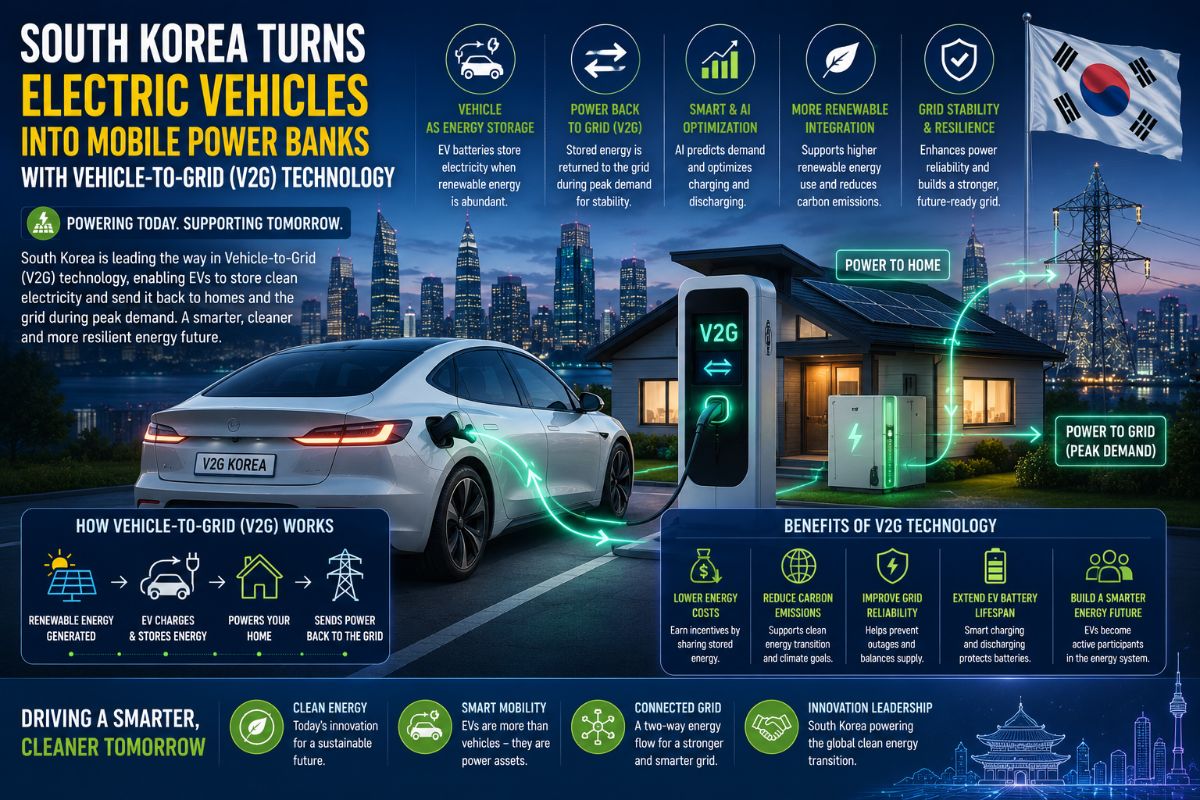
South Korea Turns Electric Vehicles into Mobile Power Banks with Vehicle-to-Grid Technology
South Korea is accelerating the development of Vehicle-to-Grid (V2G) technology, transforming electric vehicles (EVs) into mobile energy storage systems capable of both drawing electricity from and supplying power back to the grid. As renewable energy generation continues to grow, V2G technology is emerging as a practical solution for balancing electricity demand, improving grid stability, and maximizing the use of clean energy.
Instead of functioning solely as a mode of transportation, electric vehicles equipped with bidirectional charging can store excess renewable electricity during periods of high solar or wind generation and return that energy to homes, businesses, or the national grid during peak demand. This creates a flexible and distributed energy storage network without requiring large numbers of dedicated stationary batteries.
With strong government support, advanced battery manufacturing, and one of the world's fastest-growing EV markets, South Korea is positioning itself as a global leader in smart mobility and intelligent energy systems.
How Vehicle-to-Grid (V2G) Technology Works
- Electric vehicles charge when renewable electricity is abundant.
- Bidirectional chargers enable electricity to flow back to homes or the grid.
- Artificial Intelligence optimizes charging and discharging schedules.
- Utilities stabilize electricity supply during peak demand periods.
- Drivers may benefit from participating in future energy service programs.
- Renewable energy utilization increases while reducing electricity waste.
Electric Vehicles Become Part of the Smart Grid
Vehicle-to-Grid technology transforms thousands of connected electric vehicles into distributed battery storage assets. AI-powered energy management systems continuously monitor electricity demand, renewable energy production, weather conditions, and battery availability to determine the most efficient charging and discharging schedules.
As solar power, offshore wind, and battery storage continue expanding, V2G technology is expected to play an increasingly important role in supporting renewable electricity integration while improving energy resilience and reducing pressure on conventional power plants.
Recommended Renewable Energy Products

WAAREE II 580-585W TOPCon Bifacial Solar Panel (Pack of 2)
High-efficiency TOPCon bifacial solar panels designed for residential and commercial renewable energy systems.

Loom Solar Shark 600W TOPCon Bifacial Panel
Advanced photovoltaic technology delivering excellent efficiency and long-term renewable energy production.

Luminous NXG 1450e Solar Inverter
Reliable solar inverter supporting intelligent energy conversion and efficient renewable electricity management.
Smart EV Charger
Intelligent EV charging solution designed to support scheduled charging, renewable energy integration, and future Vehicle-to-Grid capabilities.
Copper Lightning Arrester
Provides dependable protection for EV charging stations, renewable energy systems, substations, and commercial electrical infrastructure.
Affiliate Disclosure: This article contains affiliate links. SolSetu may earn a commission from qualifying purchases at no additional cost to buyers.
Future Outlook
As electric vehicle adoption accelerates and renewable electricity generation continues to expand, Vehicle-to-Grid technology is expected to become an important component of future smart energy systems. South Korea's leadership in EV manufacturing, battery innovation, and digital energy management places the country in a strong position to demonstrate how transportation and electricity networks can work together to create a cleaner, more resilient, and sustainable energy future.


Leave a Reply