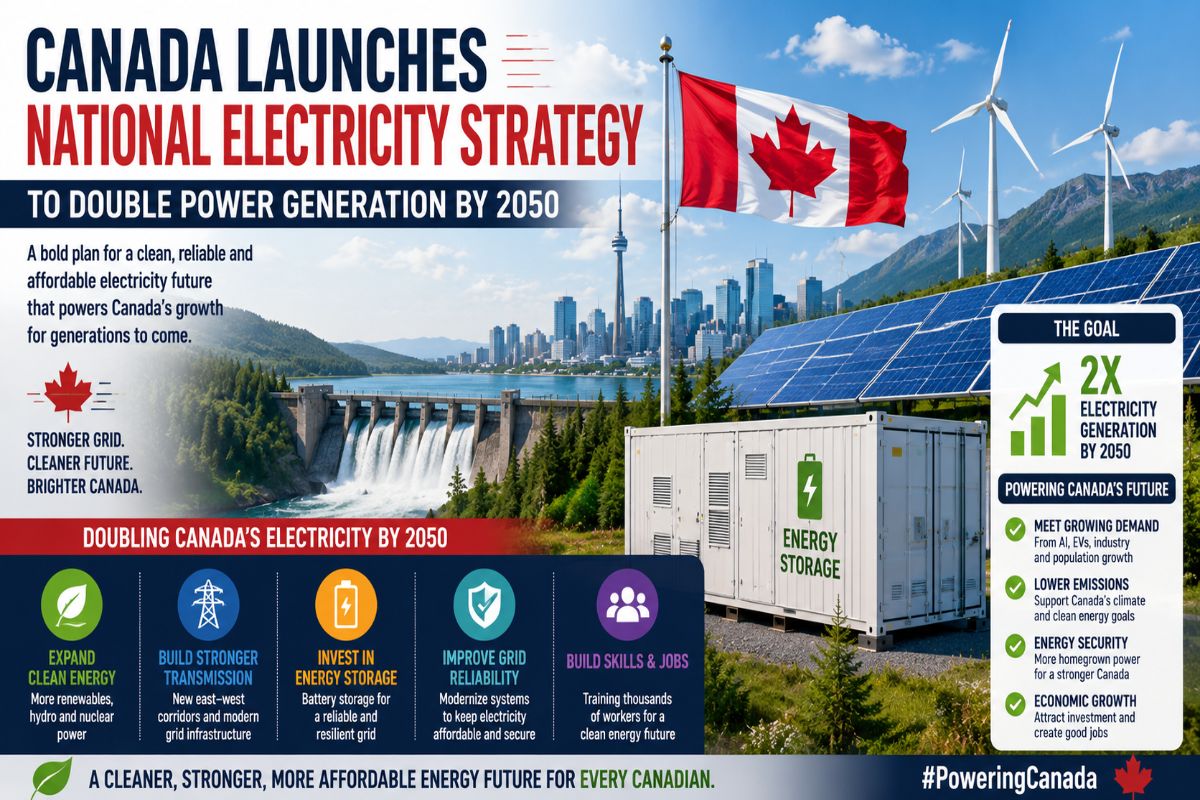
Canada Launches National Electricity Strategy to Double Power Generation by 2050
Canada has announced an ambitious National Electricity Strategy aimed at doubling the country's electricity generation and grid capacity by 2050. The initiative is designed to meet rapidly growing electricity demand while strengthening energy security, improving affordability, and supporting Canada's long-term climate goals. The strategy focuses on expanding renewable energy, hydroelectric power, nuclear energy, battery storage, and transmission infrastructure across the country.
With electricity demand expected to double by 2050 due to artificial intelligence (AI), electric vehicles, industrial electrification, and population growth, the federal government plans to accelerate investments in clean energy infrastructure while improving interprovincial grid connectivity.
📌 Key Highlights
- Canada plans to double electricity generation by 2050.
- Major investments in renewable energy, hydroelectricity, nuclear power, battery storage, and transmission lines.
- Grid modernization to improve reliability and resilience.
- Electricity demand is projected to double because of AI, electric vehicles, and industrial growth.
- New workforce development and manufacturing initiatives will support the energy transition.
Why Canada Is Expanding Its Electricity Grid
Canada already has one of the cleanest electricity systems among G7 countries, with approximately 80% of its electricity coming from low-emission sources. However, growing demand from data centres, electric transportation, industrial electrification, and economic development requires substantial expansion of generation capacity and transmission infrastructure.
Major Focus Areas of the Strategy
- Expansion of renewable energy projects.
- Modernization of aging electricity infrastructure.
- New east-west transmission corridors connecting provincial grids.
- Investment in battery energy storage systems.
- Support for hydroelectric and nuclear generation.
- Training thousands of skilled workers for the clean energy sector.
Benefits for Canadians
- More reliable electricity supply.
- Greater energy security.
- Lower emissions.
- Support for clean technology industries.
- Long-term economic growth.
- Improved integration of renewable energy.
Challenges Ahead
Building a nationwide modern electricity system will require significant public and private investment, close cooperation between federal and provincial governments, faster project approvals, and the expansion of skilled labour. The government estimates the overall transformation could require investments approaching C$1 trillion by 2050.
Future Outlook
The National Electricity Strategy is expected to become one of Canada's largest infrastructure initiatives, supporting the country's transition toward a cleaner, more reliable, and more competitive energy system while meeting future electricity demand.
Frequently Asked Questions (FAQ)
What is Canada's National Electricity Strategy?
It is a long-term federal strategy designed to double Canada's electricity generation and grid capacity by 2050 through investments in clean energy infrastructure, transmission, storage, and workforce development.
Why does Canada need more electricity?
Electricity demand is expected to increase significantly because of artificial intelligence, electric vehicles, industrial electrification, population growth, and economic development.
Will renewable energy play a major role?
Yes. Renewable energy, hydroelectricity, nuclear energy, battery storage, and grid modernization are central components of the strategy.
How will battery storage help?
Battery energy storage systems will store surplus renewable electricity and improve grid reliability during periods of high demand.
Will new transmission lines be built?
Yes. Canada plans to strengthen connections between provincial electricity grids through expanded transmission infrastructure.
When is the target completion?
The strategy aims to double Canada's electricity generation and grid capacity by 2050.
Related SolSetu Articles
- U.S. Plans Record 43.4 GW of Utility-Scale Solar Capacity in 2026
- Virtual Power Plants (VPPs): The Future of Smart Renewable Energy Grids
- Gravity Energy Storage: The Future of Long-Duration Renewable Energy Storage
- Green Hydrogen Storage: Powering the Future of Clean Energy
Source: Government of Canada and Reuters.

Leave a Reply