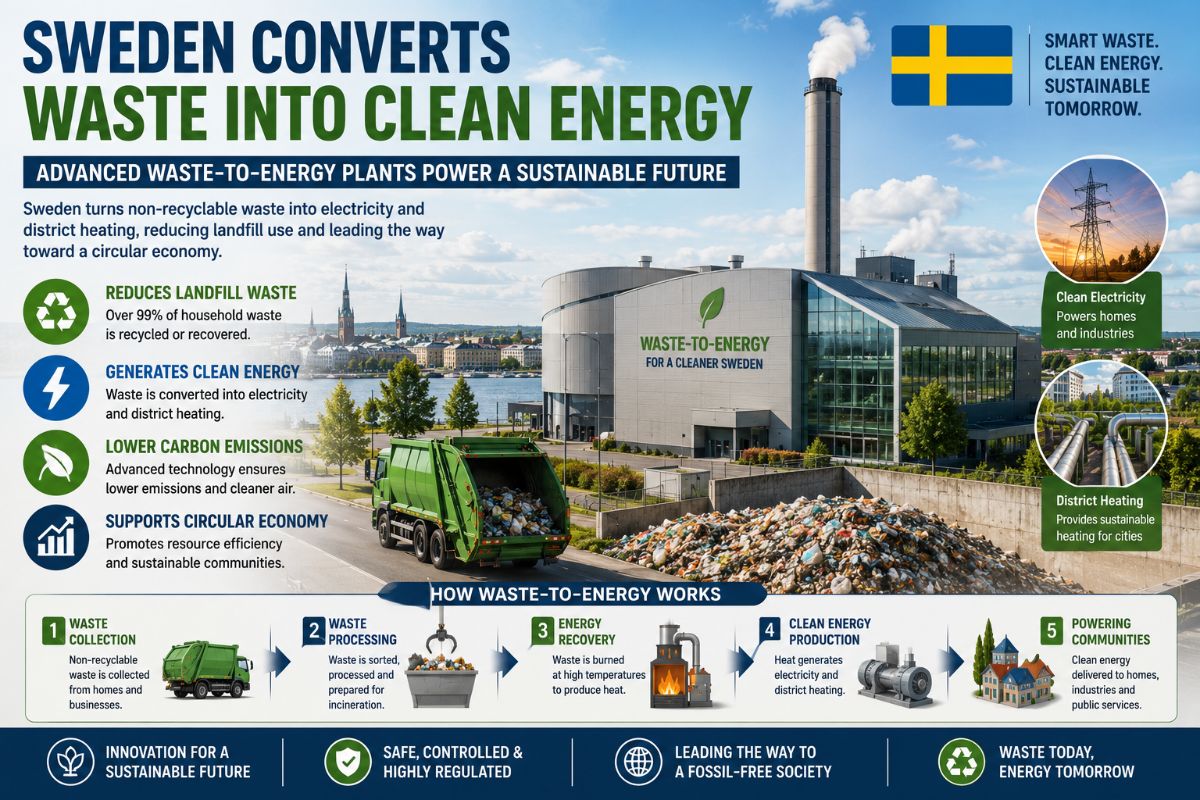
Sweden Converts Waste into Clean Energy with Advanced Waste-to-Energy Plants
Sweden has become a global leader in sustainable waste management by converting non-recyclable waste into electricity and district heating through advanced Waste-to-Energy (WtE) plants. Instead of sending waste to landfills, Sweden recovers valuable energy that powers homes, businesses, and public infrastructure while reducing environmental impact.
By combining efficient recycling systems with modern energy recovery technologies, Sweden has created a circular economy where waste becomes a valuable resource rather than an environmental burden. This approach helps lower greenhouse gas emissions, reduces landfill usage, and strengthens national energy security.
📌 Key Takeaways
- Country: Sweden
- Technology: Waste-to-Energy (WtE)
- Sector: Circular Economy & Renewable Energy
- Primary Benefit: Electricity and district heating from non-recyclable waste
- Applications: Cities, industries, public utilities and district heating networks
💡 Did You Know?
Sweden sends only a very small fraction of its household waste to landfill. Most waste is either recycled or converted into electricity and district heating through highly efficient waste-to-energy facilities.
What Is Waste-to-Energy?
Waste-to-Energy is a process that converts non-recyclable municipal and industrial waste into usable electricity and heat. Modern facilities burn waste under carefully controlled conditions while advanced emission control systems help minimize environmental impact.
How Sweden's Waste-to-Energy Plants Work
- Waste is collected from homes and businesses.
- Recyclable materials are removed.
- Remaining waste is processed and fed into high-efficiency combustion systems.
- The heat produced generates steam.
- Steam drives turbines that generate electricity.
- Excess heat is distributed through district heating networks to warm homes and buildings.
Benefits of Waste-to-Energy
- Significantly reduces landfill waste.
- Generates renewable electricity.
- Provides efficient district heating.
- Reduces methane emissions from landfills.
- Supports a circular economy.
- Improves resource efficiency.
- Creates local employment opportunities.
Environmental Safeguards
Modern Swedish waste-to-energy plants use advanced filtration and emissions-control technologies to reduce particulate matter, nitrogen oxides, and other pollutants. Continuous environmental monitoring helps ensure compliance with strict regulations.
Frequently Asked Questions
What is a waste-to-energy plant?
A waste-to-energy plant converts non-recyclable waste into electricity and useful heat through controlled thermal processes.
Is waste-to-energy renewable?
Waste-to-energy is generally considered a complementary energy recovery technology. The renewable share depends on the proportion of biodegradable materials in the waste stream.
Does waste-to-energy cause pollution?
Modern facilities use advanced emission-control technologies that significantly reduce pollutants compared with older incineration methods.
Why is Sweden successful in waste management?
Sweden combines efficient recycling systems, strong environmental policies, and advanced waste-to-energy infrastructure to maximize resource recovery.
Can waste-to-energy replace landfills?
Waste-to-energy can greatly reduce landfill use but does not eliminate the need for recycling or responsible waste management practices.
Which countries are adopting waste-to-energy technology?
Countries including Sweden, Denmark, Japan, Singapore, Germany, and the Netherlands have invested in advanced waste-to-energy facilities.
Recommended Renewable Energy Products

Luminous Solar NXG 1150 Solar Kit
A complete solar backup solution for homes and businesses seeking reliable clean energy.

Bluth 5kW–10kW On-Grid Solar Power System
A complete on-grid solar system suitable for commercial buildings, institutions, and industrial applications.

Kenbrook Solar MC4 Crimping Tool Kit
Professional-grade installation tool for secure and efficient solar connector assembly.

Pure Copper Lightning Arrester
Protect renewable energy systems and electrical installations from lightning surges.
Related SolSetu Articles
- Japan Accelerates Transparent Solar Panel Innovation for Smart Buildings
- Chile Powers Sustainable Mining with Renewable Energy Expansion
- Portugal Accelerates Floating Offshore Wind Projects to Expand Renewable Energy
- France Expands Solar Canopies to Power Public Parking Areas
Affiliate Disclosure: This article contains affiliate links. SolSetu may earn a commission from qualifying purchases at no additional cost to buyers.




Leave a Reply