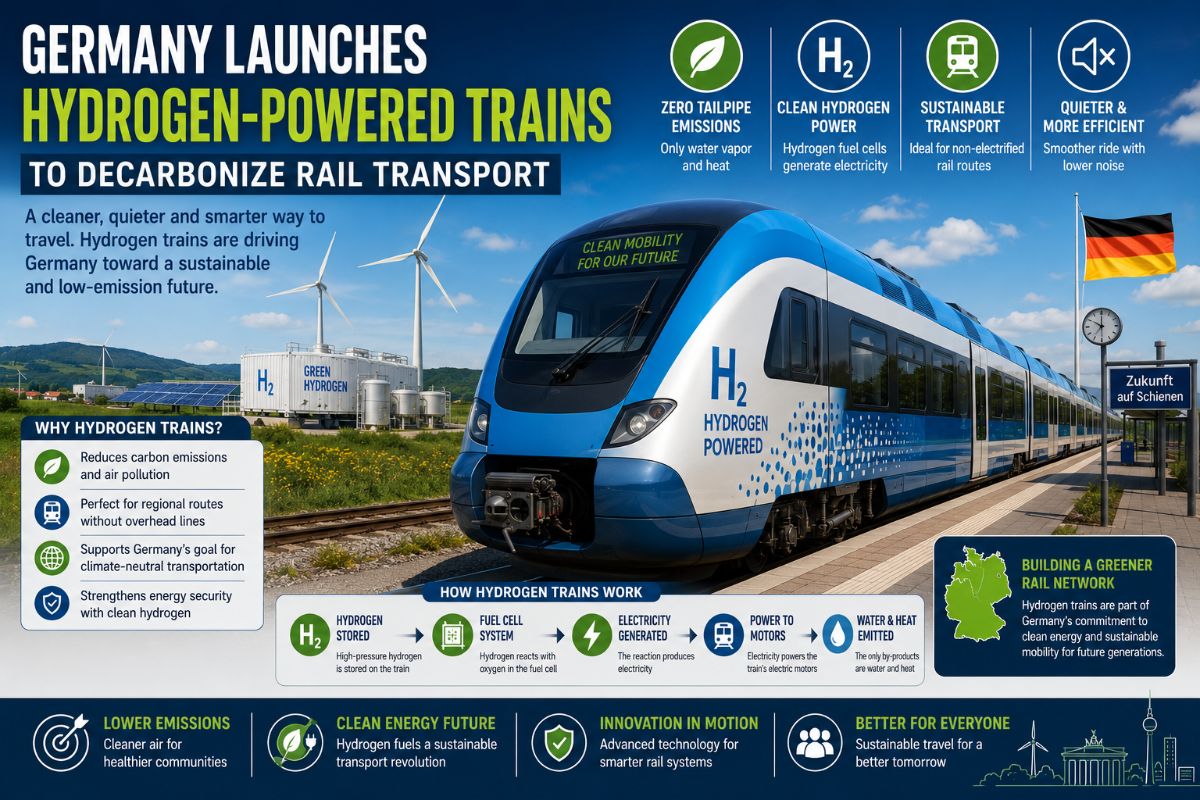
Germany Launches Hydrogen-Powered Trains to Decarbonize Rail Transport
Germany is accelerating the transition to sustainable public transportation by introducing hydrogen-powered trains across regional railway networks. These innovative trains use hydrogen fuel cells instead of diesel engines, producing electricity on board while emitting only water vapor and heat during operation.
Hydrogen-powered trains offer an environmentally friendly solution for rail routes that are not electrified. By replacing diesel locomotives with hydrogen technology, Germany aims to reduce greenhouse gas emissions, improve air quality, and support its long-term climate goals.
📌 Key Takeaways
- Country: Germany
- Technology: Hydrogen Fuel Cell Trains
- Sector: Sustainable Rail Transportation
- Primary Benefit: Zero tailpipe emissions on non-electrified railway lines
- Fuel: Green Hydrogen
💡 Did You Know?
Hydrogen trains can travel hundreds of kilometers on a single tank of hydrogen while emitting only water vapor, making them a promising alternative to diesel-powered rail transport.
What Are Hydrogen-Powered Trains?
Hydrogen-powered trains use fuel cells to convert hydrogen and oxygen into electricity. The electricity powers electric traction motors, while rechargeable batteries store excess energy generated during braking, improving overall efficiency.
How Hydrogen Fuel Cell Technology Works
- Hydrogen is stored in onboard high-pressure tanks.
- The hydrogen enters a fuel cell stack.
- Hydrogen reacts with oxygen from the air.
- The chemical reaction produces electricity.
- Electric motors drive the train.
- The only direct by-products are water vapor and heat.
Benefits of Hydrogen Trains
- Zero tailpipe carbon emissions.
- Lower noise compared to diesel trains.
- Suitable for routes without overhead electric lines.
- Reduced dependence on fossil fuels.
- Supports national climate goals.
- Lower maintenance requirements than conventional diesel engines.
Challenges of Hydrogen Rail Transport
Hydrogen trains require dedicated fueling infrastructure and a reliable supply of low-carbon or green hydrogen. Initial investments are higher than conventional diesel systems, but technological improvements and increasing hydrogen production are expected to reduce costs over time.
Frequently Asked Questions
What is a hydrogen-powered train?
A hydrogen-powered train uses fuel cells to generate electricity from hydrogen, replacing conventional diesel engines.
Do hydrogen trains produce emissions?
Hydrogen fuel cell trains emit only water vapor and heat during operation, making them a low-emission transportation solution.
Why is Germany investing in hydrogen trains?
Germany is reducing dependence on diesel-powered rail transport while supporting cleaner mobility and climate objectives.
Are hydrogen trains better than diesel trains?
Hydrogen trains produce significantly lower emissions, operate more quietly, and are particularly useful on rail routes that are not electrified.
Which countries are developing hydrogen rail technology?
Germany, France, Italy, Japan, the United Kingdom, China, and several other countries are exploring hydrogen-powered rail systems.
Will hydrogen replace electric trains?
Hydrogen trains are expected to complement rather than replace conventional electric rail systems, particularly on regional and non-electrified routes.
Recommended Renewable Energy Products

Loom Solar Shark 600W TOPCon Bifacial Solar Panel
High-efficiency N-Type bifacial solar panel designed for residential, commercial, and industrial renewable energy projects.

Luminous Solar NXG 1150 Solar Kit
A complete solar backup solution for homes and small businesses seeking reliable renewable energy.

Kenbrook Solar MC4 Crimping Tool Kit
Professional installation tool for secure MC4 connector assembly in photovoltaic systems.

Pure Copper Lightning Arrester
Protect renewable energy installations and electrical infrastructure from lightning surges.
Related SolSetu Articles
- South Korea Advances Tidal Power to Harness Ocean Energy
- Sweden Converts Waste into Clean Energy with Advanced Waste-to-Energy Plants
- Japan Accelerates Transparent Solar Panel Innovation for Smart Buildings
- Portugal Accelerates Floating Offshore Wind Projects to Expand Renewable Energy
Affiliate Disclosure: This article contains affiliate links. SolSetu may earn a commission from qualifying purchases at no additional cost to you.



Leave a Reply