India Planning National Solar Grid Interaction Safety Code for 2026 to Prevent Grid Fluctuations & Inverter Misoperations
By SolSetu News Desk
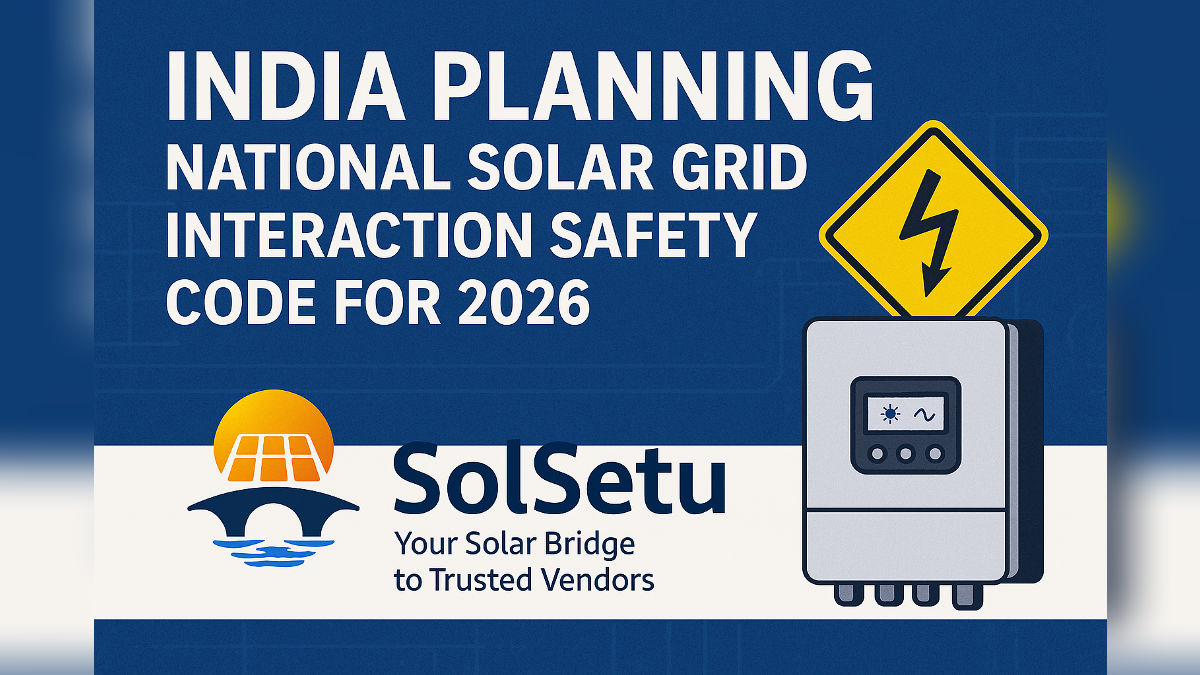
The Government of India is working on a groundbreaking policy called the Solar Grid Interaction Safety Code (SGISC-2026), which aims to regulate how rooftop solar inverters interact with the national electricity grid. Senior officials told SolSetu that the new code will focus on stabilizing grid behaviour, reducing reverse-power issues, and preventing inverter misoperations during voltage fluctuations.
With India rapidly expanding its rooftop solar capacity, grid safety has become a top priority for DISCOMs and regulators.
Why SGISC-2026 Is Important
DISCOM reports indicate multiple challenges:
- Sudden inverter shutdowns during low voltage
- Reverse power injection beyond safe limits
- Anti-islanding failures during power cuts
- Overloading of transformers in dense rooftop solar regions
- Voltage imbalance caused by uneven solar generation
SGISC-2026 will aim to standardize how inverters must respond to such situations.
Key Features Under Discussion
According to early drafts, the safety code may include:
- Mandatory anti-islanding response times for all inverters
- Grid-safe export limit algorithms for residential systems
- Voltage & frequency stability thresholds
- Cap on peak export during mid-day generation
- Automatic ramp-up rate control after grid restoration
- Inverter behaviour rules for low-voltage & high-voltage scenarios
- Real-time monitoring compatibility with DISCOM portals
These measures will help prevent outages, protect transformers, and ensure stable grid performance.
Benefits for Consumers
Once implemented, SGISC-2026 may help rooftop solar users:
- Avoid inverter trips during voltage fluctuations
- Reduce grid-related inverter damage
- Ensure safer energy export and better DISCOM approval timelines
- Improve system performance during peak generation hours
- Comply with future net-metering safety norms
Experts say the code will create a safer, more predictable rooftop solar ecosystem.
Pilot Testing in 2026
Initial testing may start in regions with high rooftop penetration:
- Gujarat
- Maharashtra
- Tamil Nadu
- Rajasthan
- Karnataka
Nationwide implementation is expected after OEM alignment and DISCOM integration.
SolSetu will continue covering updates as SGISC-2026 moves toward final approval.



Leave a Reply