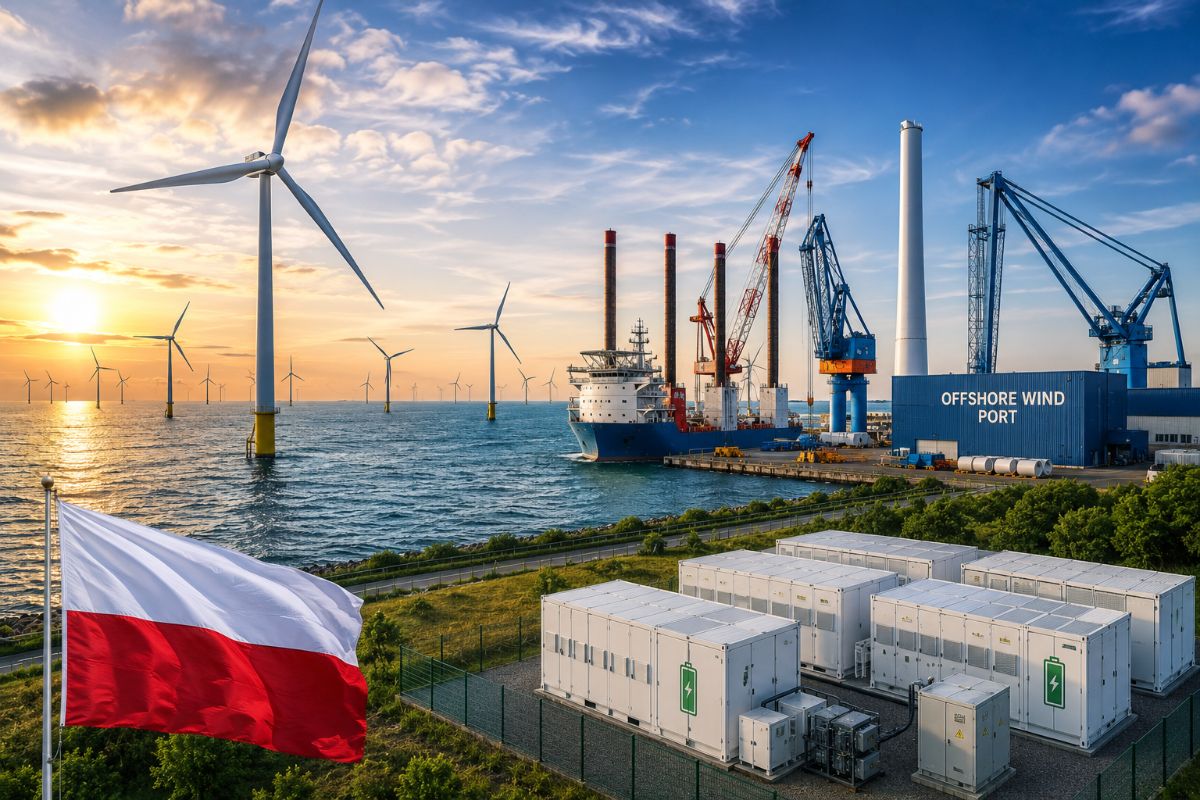
Poland Expands Baltic Sea Offshore Wind Infrastructure to Accelerate Renewable Energy Transition
Warsaw, Poland – June 20, 2026: Poland is strengthening its renewable energy ambitions through significant investments in offshore wind infrastructure, battery energy storage systems, and modernized power networks. As Europe accelerates its clean energy transition, Poland is emerging as one of the continent's fastest-growing renewable energy markets.
Historically dependent on coal-fired electricity generation, Poland is now investing heavily in offshore wind projects along the Baltic Sea coast, aiming to improve energy security, reduce carbon emissions, and diversify its energy mix.
Offshore Wind Becomes a National Priority
The Baltic Sea has become a strategic location for Poland's renewable energy development plans. Government-backed initiatives and private sector investments are supporting the expansion of offshore wind infrastructure, including specialized port facilities, logistics terminals, and grid connection projects.
Industry experts believe offshore wind could play a transformative role in Poland's energy future by delivering large-scale clean electricity while reducing dependence on fossil fuel imports.
Infrastructure Expansion Supports Future Growth
Energy companies are exploring the expansion of offshore wind terminal facilities to support the next generation of wind farm developments in the Baltic region. Enhanced logistics capabilities are expected to improve project efficiency and strengthen Poland's position as a key offshore wind hub in Central Europe.
New investments in transmission infrastructure and grid modernization are also helping prepare the country's electricity network for increased renewable energy integration.
Battery Storage Investments Gain Momentum
Alongside renewable generation, Poland is witnessing growing investment in Battery Energy Storage Systems (BESS). Large-scale storage projects are expected to improve grid stability, enhance energy flexibility, and support the reliable operation of renewable energy assets.
Energy storage technologies are increasingly recognized as essential for balancing intermittent renewable generation and maintaining electricity system resilience.
Solar and Wind Capacity Continue to Rise
Poland's renewable energy expansion extends beyond offshore wind. The country has experienced rapid growth in solar photovoltaic installations and onshore wind capacity, contributing to a more diversified and sustainable energy portfolio.
Combined investments in solar energy, offshore wind, battery storage, and grid modernization are helping accelerate Poland's transition toward a cleaner and more competitive energy system.
Economic and Energy Security Benefits
Renewable energy development is expected to create new employment opportunities across manufacturing, engineering, construction, and energy services sectors. At the same time, increased domestic renewable generation can strengthen national energy security by reducing exposure to global fossil fuel market volatility.
The offshore wind supply chain is also attracting international investment and creating opportunities for local businesses to participate in Europe's growing clean energy economy.
Looking Ahead
With strong government support, expanding infrastructure, and growing private sector participation, Poland is positioning itself as a major renewable energy player in Europe. The country's commitment to offshore wind, energy storage, and grid modernization highlights its determination to build a more resilient and sustainable energy future.
As renewable energy deployment continues to accelerate, Poland's Baltic Sea offshore wind sector could become one of Europe's most significant clean energy success stories during the coming decade.



Leave a Reply