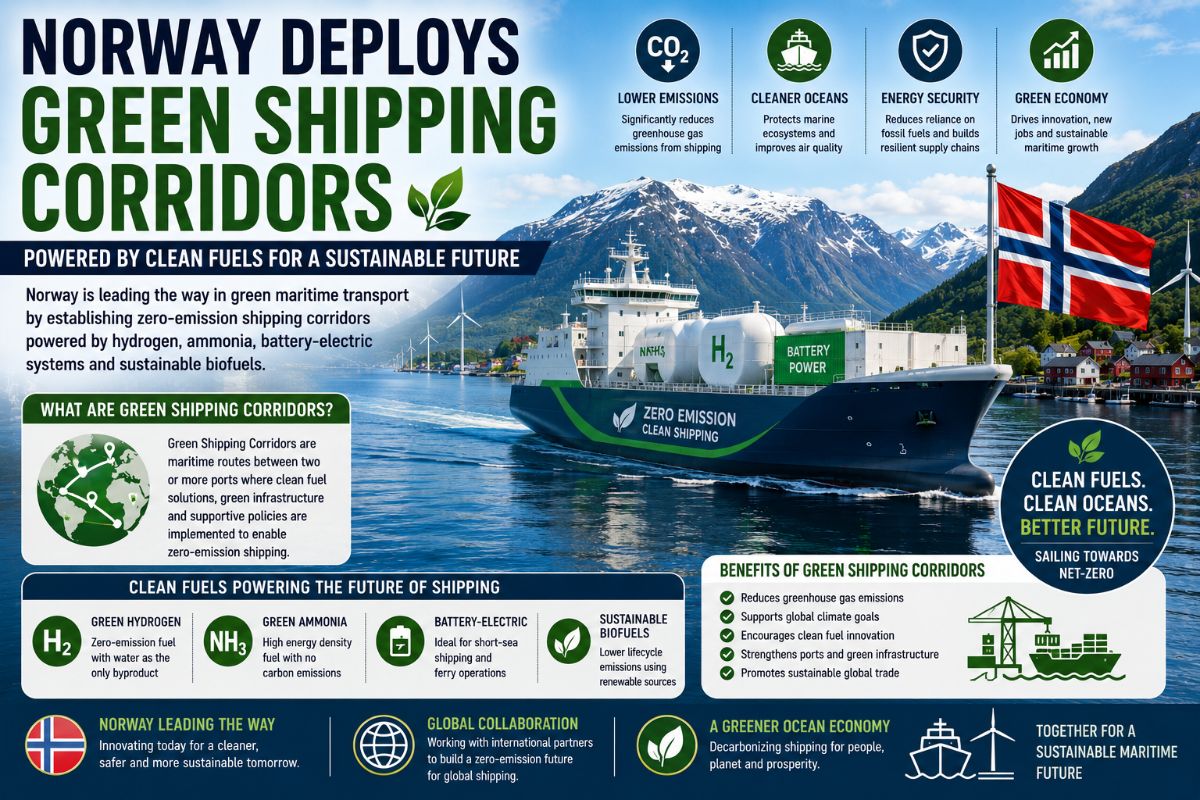
Norway Deploys Green Shipping Corridors Powered by Clean Fuels
Norway is leading the global transition toward sustainable maritime transport by expanding Green Shipping Corridors that support vessels powered by clean fuels such as green hydrogen, green ammonia, battery-electric systems, and sustainable biofuels. These dedicated shipping routes are designed to significantly reduce greenhouse gas emissions while improving the efficiency of maritime logistics.
As international trade continues to rely heavily on sea transport, Norway's investment in zero-emission shipping technologies demonstrates how innovation and clean energy can transform one of the world's most carbon-intensive industries.
📌 Key Takeaways
- Country: Norway
- Technology: Green Shipping Corridors
- Sector: Sustainable Maritime Transport
- Primary Benefit: Lower greenhouse gas emissions from shipping.
- Applications: Cargo vessels, ferries, ports, coastal transport, and international shipping routes.
💡 Did You Know?
Approximately 80–90% of global trade by volume is transported by sea. Decarbonizing shipping is considered essential for achieving global climate goals.
What Are Green Shipping Corridors?
Green Shipping Corridors are designated maritime routes where ports, shipping companies, fuel suppliers, and governments collaborate to enable vessels powered by low-carbon or zero-emission fuels through dedicated infrastructure and supportive policies.
How Green Shipping Corridors Work
- Ships operate using clean fuels or battery-electric propulsion.
- Ports provide charging, hydrogen, ammonia, or sustainable fuel infrastructure.
- Digital systems optimize vessel operations and fuel efficiency.
- Renewable electricity powers fuel production where applicable.
- Zero- or low-emission vessels transport cargo and passengers.
- Emissions are significantly reduced across the shipping route.
Why Norway Is Investing in Green Shipping
- Reduce greenhouse gas emissions.
- Support maritime decarbonization.
- Promote clean fuel innovation.
- Strengthen energy security.
- Create green jobs and industries.
- Maintain leadership in sustainable shipping technologies.
Benefits of Green Shipping Corridors
- Lower carbon emissions.
- Cleaner air around ports and coastal communities.
- Accelerates adoption of clean maritime fuels.
- Supports international climate commitments.
- Improves long-term energy resilience.
- Encourages global collaboration on sustainable shipping.
Challenges
Developing Green Shipping Corridors requires significant investment in port infrastructure, clean fuel production, vessel technology, and international cooperation. Scaling the availability of green hydrogen and ammonia remains an important challenge for widespread adoption.
Frequently Asked Questions
What is a Green Shipping Corridor?
A Green Shipping Corridor is a maritime route where ships use low-carbon or zero-emission fuels supported by dedicated port infrastructure and international cooperation.
Why is Norway investing in Green Shipping Corridors?
Norway aims to reduce shipping emissions, accelerate clean fuel adoption, strengthen maritime competitiveness, and support global climate objectives.
What fuels can replace conventional marine fuel?
Green hydrogen, green ammonia, battery-electric propulsion, methanol, and sustainable biofuels are among the leading alternatives to conventional marine fuels.
Can battery-electric ships operate commercially?
Yes. Battery-electric ferries and short-distance commercial vessels are already operating successfully in several countries, including Norway.
Which countries are developing Green Shipping Corridors?
Norway, Singapore, Australia, the Netherlands, the United Kingdom, the United States, Japan, and several other countries are investing in Green Shipping Corridor initiatives.
How do Green Shipping Corridors support climate goals?
They reduce emissions from one of the world's largest transport sectors while accelerating the use of renewable fuels and clean maritime technologies.
Recommended Renewable Energy Products

WAAREE II 580–585W TOPCon Bifacial Solar Panel
High-efficiency bifacial solar panel for residential, commercial, and utility-scale renewable energy systems.

Luminous Solar NXG 1150 Solar Kit
Reliable solar backup solution for homes and businesses seeking dependable renewable energy.

Kenbrook Solar MC4 Crimping Tool Kit
Professional installation tool for secure MC4 connector assembly in photovoltaic systems.

Pure Copper Lightning Arrester
Provides dependable lightning and surge protection for renewable energy installations.
Related SolSetu Articles
- Canada Invests in Small Modular Reactors for a Clean Energy Future
- Brazil Expands Bioenergy Production Using Agricultural Waste
- Singapore Expands Floating Solar Farms on Reservoirs to Boost Clean Energy
- Australia Develops Iron-Air Batteries for Multi-Day Renewable Energy Storage
Affiliate Disclosure: This article contains affiliate links. SolSetu may earn a commission from qualifying purchases at no additional cost to buyers.




Leave a Reply