Germany Tests Airborne Wind Energy Systems for High-Altitude Clean Power
Germany is exploring Airborne Wind Energy (AWE), an innovative renewable energy technology designed to capture stronger and more consistent winds found at higher altitudes. Instead of using conventional wind turbine towers, these systems rely on tethered kites, drones, or autonomous aircraft connected to a ground station that converts wind energy into electricity.
As countries seek more efficient renewable energy solutions, Airborne Wind Energy has attracted attention because it requires less construction material than traditional wind turbines and can access wind resources beyond the reach of fixed towers. Germany's engineering expertise is helping advance research into this promising clean energy technology.
📌 Key Takeaways
- Country: Germany
- Technology: Airborne Wind Energy (AWE)
- Sector: Wind Energy
- Primary Benefit: Captures stronger and more consistent high-altitude winds.
- Applications: Utility-scale power generation, remote communities, islands, hybrid renewable systems, and off-grid installations.
💡 Did You Know?
Wind speeds several hundred meters above the ground are often stronger and more consistent than those available to conventional wind turbines, offering the potential for higher electricity generation.
What Is Airborne Wind Energy?
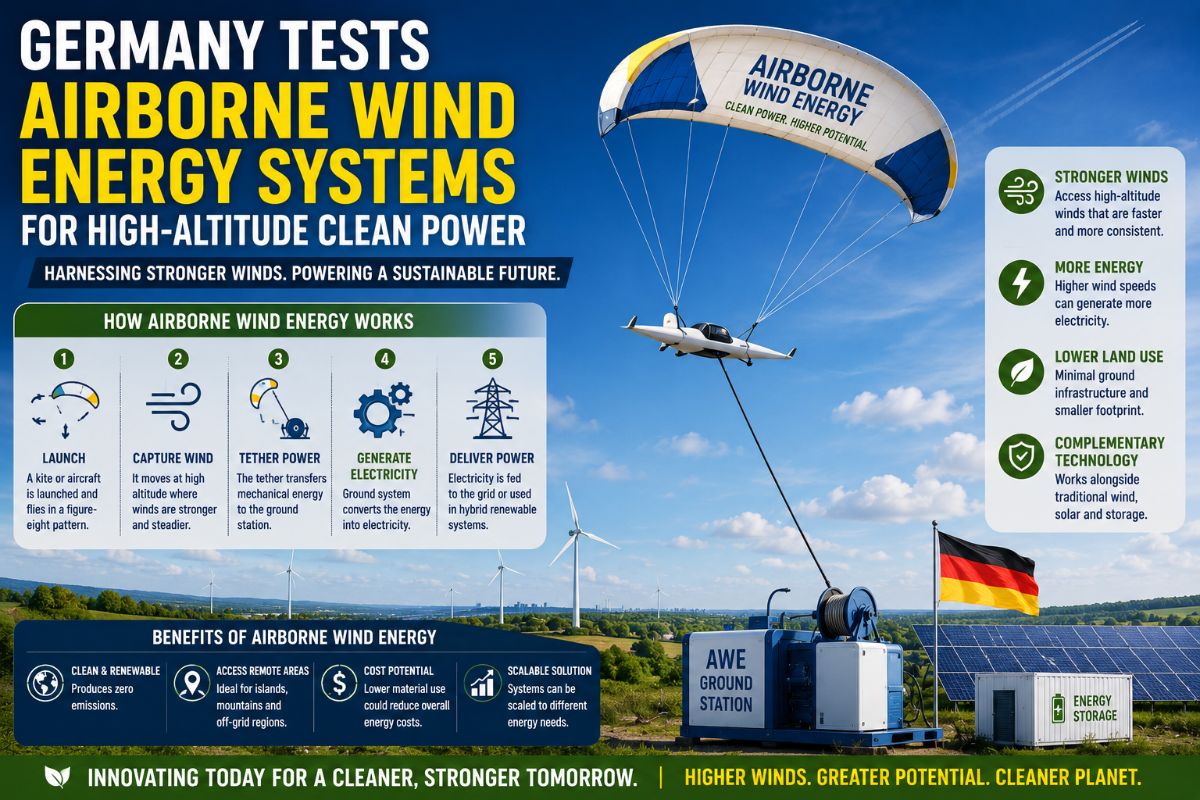
Airborne Wind Energy is a renewable energy technology that uses tethered flying devices, such as kites or autonomous aircraft, to harness wind at higher altitudes. The system converts aerodynamic forces into electricity through a ground-based generator or onboard generation system.
How Airborne Wind Energy Works
- A kite or aircraft is launched into strong high-altitude winds.
- The aircraft follows controlled flight paths to maximize energy capture.
- The tether transfers mechanical force to the ground station.
- A generator converts the mechanical energy into electricity.
- The generated electricity is supplied to the power grid.
- The aircraft lands automatically for maintenance when required.
Why Germany Is Investing in Airborne Wind Energy
- Capture stronger high-altitude wind resources.
- Reduce material requirements compared to tall wind turbines.
- Support renewable energy innovation.
- Expand clean electricity generation.
- Improve energy security.
- Develop next-generation wind technologies.
Benefits of Airborne Wind Energy
- Access to stronger and steadier winds.
- Lower structural material requirements.
- Potentially lower installation costs.
- Suitable for remote and off-grid locations.
- Supports renewable energy diversification.
- Lower greenhouse gas emissions.
Challenges
Airborne Wind Energy is still an emerging technology. Developers continue working on improving flight control systems, durability, aviation safety regulations, automated operation, and long-term commercial viability before large-scale deployment becomes common.
Frequently Asked Questions
What is Airborne Wind Energy?
Airborne Wind Energy is a renewable energy technology that generates electricity using tethered kites or autonomous aircraft flying in stronger high-altitude winds.
How do airborne wind systems generate electricity?
The flying device captures wind energy, which is transferred through a tether to a ground-based generator or converted onboard before supplying electricity to the grid.
Why is Germany investing in Airborne Wind Energy?
Germany is exploring Airborne Wind Energy to improve renewable electricity generation, reduce infrastructure requirements, and develop innovative clean energy technologies.
Are airborne wind systems safe?
Modern systems incorporate autonomous flight controls, monitoring systems, and safety mechanisms designed to operate within regulated airspace while minimizing operational risks.
Which countries are developing Airborne Wind Energy?
Germany, the Netherlands, Ireland, the United Kingdom, Norway, Switzerland, the United States, and several other countries are supporting Airborne Wind Energy research.
Can Airborne Wind Energy replace traditional wind turbines?
Airborne Wind Energy is expected to complement conventional wind turbines rather than replace them, particularly in locations where high-altitude wind resources provide additional advantages.
Recommended Renewable Energy Products

Loom Solar Shark 600W TOPCon Bifacial Solar Panel
High-efficiency bifacial solar panel designed for residential, commercial, and utility-scale renewable energy projects.

Luminous Solar NXG 1150 Solar Kit
Reliable solar backup solution for homes, farms, and businesses seeking dependable renewable power.

Kenbrook Solar MC4 Crimping Tool Kit
Professional installation tool for secure MC4 connector assembly in photovoltaic systems.

Pure Copper Lightning Arrester
Protects renewable energy systems against lightning strikes and electrical surges.
Related SolSetu Articles
- China Advances Sodium-Ion Batteries to Expand Affordable Energy Storage
- Iceland Expands Carbon Capture and Storage Powered by Renewable Energy
- Norway Develops Floating Offshore Solar Farms to Expand Clean Energy
- Japan Expands Vehicle-to-Grid Technology to Strengthen Renewable Energy
Affiliate Disclosure: This article contains affiliate links. SolSetu may earn a commission from qualifying purchases at no additional cost to buyers.
Leave a Reply