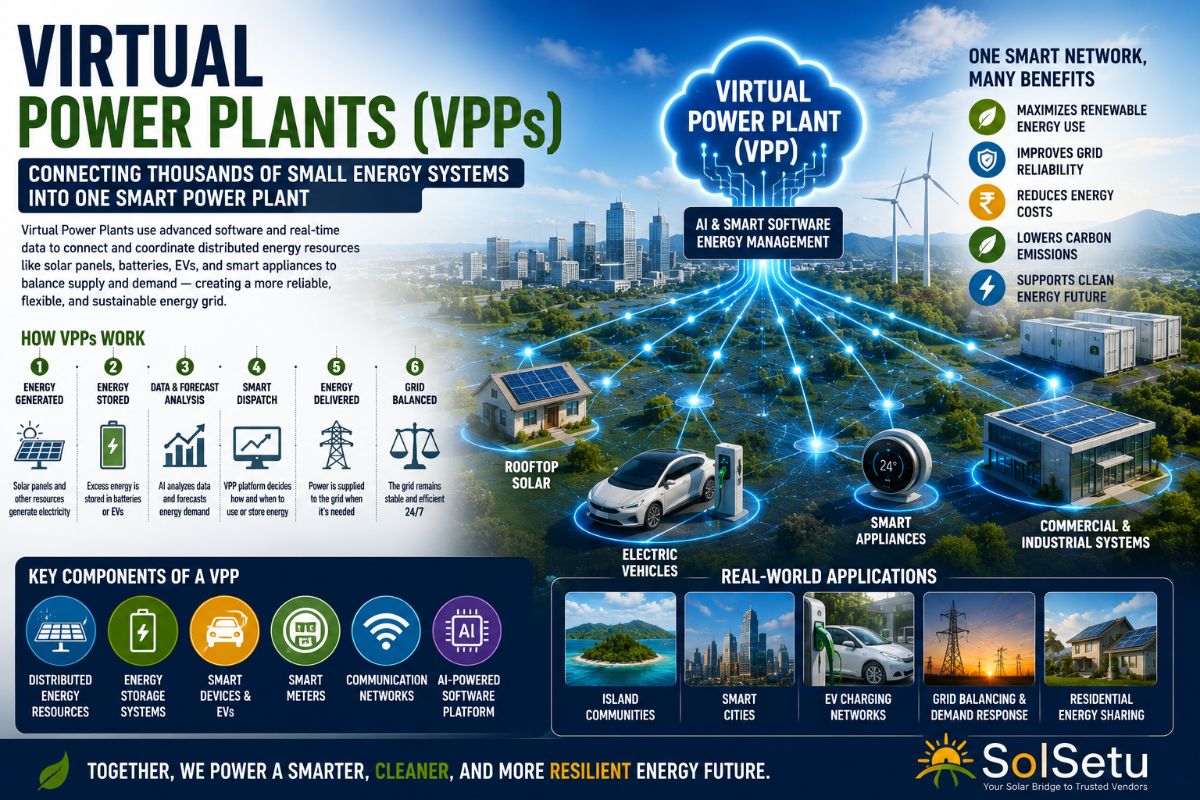
Virtual Power Plants (VPPs): Connecting Thousands of Small Energy Systems into One Smart Power Plant
As renewable energy adoption accelerates, electricity grids are becoming more decentralized. Millions of rooftop solar systems, home batteries, electric vehicles, and smart appliances are now capable of generating, storing, or managing electricity. A Virtual Power Plant (VPP) brings these distributed energy resources together through intelligent software, allowing them to operate like one large power plant.
Instead of constructing new fossil fuel power stations, VPPs help utilities balance electricity demand and supply using existing renewable energy assets. This improves grid reliability, reduces costs, and supports a cleaner energy future.
📌 Key Takeaways
- Technology: Virtual Power Plants (VPPs)
- Sector: Smart Grid & Distributed Energy
- Primary Benefit: Coordinates thousands of distributed energy resources as one intelligent power plant.
- Applications: Rooftop solar, home batteries, electric vehicles, demand response, microgrids, and smart cities.
💡 Did You Know?
A Virtual Power Plant doesn't generate electricity itself. Instead, it intelligently controls distributed energy resources to deliver electricity whenever the grid needs additional power.
What Is a Virtual Power Plant?
A Virtual Power Plant is a cloud-based energy management platform that connects distributed energy resources such as solar panels, battery storage systems, electric vehicles, and smart appliances. Using real-time communication and artificial intelligence, these resources work together as a single coordinated power system.
How Virtual Power Plants Work
- Homes and businesses generate electricity using rooftop solar panels.
- Battery storage systems store excess renewable energy.
- Electric vehicles and smart devices communicate with the VPP platform.
- Artificial intelligence forecasts electricity demand.
- The VPP dispatches stored energy when demand increases.
- The electricity grid remains stable while maximizing renewable energy use.
Main Components of a VPP
- Rooftop solar systems.
- Home and commercial battery storage.
- Electric vehicles with smart charging.
- Smart meters.
- AI-based energy management software.
- Grid communication infrastructure.
Benefits of Virtual Power Plants
- Improves electricity grid stability.
- Supports renewable energy integration.
- Reduces peak electricity demand.
- Delays the need for new power plants.
- Can lower electricity costs for participants.
- Improves resilience during power outages.
Challenges
Successful VPP deployment requires advanced communication networks, cybersecurity, supportive regulations, smart meters, and widespread participation by consumers and energy providers.
Future Outlook
As rooftop solar, battery storage, and electric vehicles become more common, Virtual Power Plants are expected to play an increasingly important role in creating flexible, reliable, and low-carbon electricity systems worldwide.
Frequently Asked Questions
What is a Virtual Power Plant?
A Virtual Power Plant is a digital platform that coordinates distributed energy resources so they operate like one large power station.
How does a VPP work?
It uses software, smart meters, and communication networks to control rooftop solar systems, batteries, electric vehicles, and other distributed energy resources.
Can homeowners join a Virtual Power Plant?
Yes. In regions where VPP programs are available, homeowners with compatible solar panels, batteries, or smart devices may be able to participate.
Why are VPPs important?
They improve grid reliability, support renewable energy integration, reduce electricity costs, and increase energy resilience.
Do Virtual Power Plants replace traditional power stations?
No. VPPs complement existing electricity infrastructure by optimizing distributed energy resources and reducing pressure on conventional power plants.
Can electric vehicles participate in a VPP?
Yes. Electric vehicles equipped with smart charging or bidirectional charging technology can become valuable resources within a Virtual Power Plant.
Recommended Renewable Energy Products
WAAREE II 580–585W TOPCon Bifacial Solar Panel
High-efficiency bifacial solar panel for residential and commercial renewable energy systems.
Luminous NXG 1450e Solar Inverter
Reliable solar inverter for efficient renewable energy generation and backup power.
Kenbrook Solar MC4 Crimping Tool Kit
Professional installation tool for secure solar cable connections.
Pure Copper Lightning Arrester
Provides reliable lightning protection for renewable energy installations.
Related SolSetu Articles
- Ocean Thermal Energy Conversion (OTEC): Harnessing Ocean Heat for Clean Electricity
- Wave Energy: Harnessing the Power of Ocean Waves for Clean Electricity
- Gravity Energy Storage: The Future of Long-Duration Renewable Energy Storage
- Vehicle-to-Grid (V2G): How Electric Vehicles Can Power the Future
Affiliate Disclosure: This article contains affiliate links. SolSetu may earn a commission from qualifying purchases at no additional cost to buyers.



Leave a Reply