Vehicle-to-Grid (V2G): How Electric Vehicles Can Power the Future
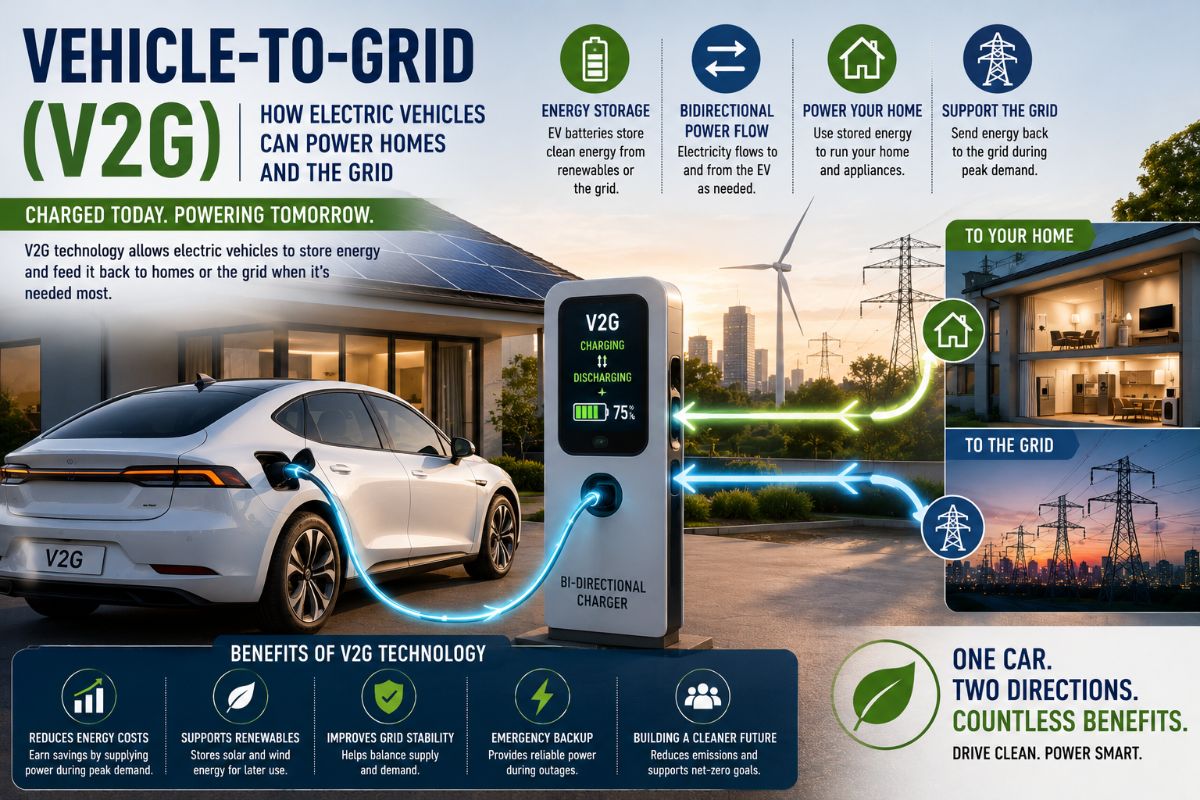
Electric vehicles (EVs) are no longer just a cleaner way to travel. With Vehicle-to-Grid (V2G) technology, EVs can also become mobile energy storage systems. Instead of only charging from the electricity grid, compatible EVs can send stored electricity back to homes, businesses, or the grid during periods of high demand.
As renewable energy generation continues to grow, V2G technology offers an innovative way to balance electricity supply and demand while improving grid stability and making better use of solar and wind energy.
📌 Key Takeaways
- Technology: Vehicle-to-Grid (V2G)
- Sector: Smart Grid & Electric Mobility
- Primary Benefit: Electric vehicles can both consume and supply electricity.
- Applications: Home backup power, grid balancing, renewable energy storage, emergency power supply, and demand response.
💡 Did You Know?
A compatible electric vehicle can store a significant amount of electricity in its battery. With bidirectional charging technology, part of this stored energy can be supplied back to a home or the electricity grid when required.
What Is Vehicle-to-Grid (V2G)?
Vehicle-to-Grid (V2G) is a bidirectional charging technology that allows electricity to flow both into and out of an electric vehicle. When electricity demand is high or renewable generation is low, compatible EVs can discharge a portion of their stored energy back to the grid or to a connected building.
How V2G Technology Works
- Renewable energy or the electricity grid charges the EV battery.
- The battery stores electricity until it is needed.
- A bidirectional charger enables electricity to flow in both directions.
- During peak demand, stored electricity is exported from the vehicle.
- The electricity supports homes, businesses, or the power grid.
- The EV is recharged later when electricity demand decreases or renewable generation increases.
Benefits of Vehicle-to-Grid
- Supports renewable energy integration.
- Reduces stress on the electricity grid during peak demand.
- Provides emergency backup power.
- Improves overall grid stability.
- Can reduce electricity costs under suitable pricing programs.
- Makes better use of existing EV batteries.
Applications of V2G
- Residential backup power.
- Commercial buildings.
- Smart cities.
- Fleet vehicle management.
- Renewable energy storage.
- Utility demand response programs.
Challenges
Large-scale V2G adoption requires compatible electric vehicles, bidirectional chargers, supportive regulations, communication standards, and utility participation. Battery management systems must also ensure that energy exported to the grid does not compromise the driver's mobility needs.
Frequently Asked Questions
What is Vehicle-to-Grid (V2G)?
Vehicle-to-Grid is a technology that enables compatible electric vehicles to both charge from and discharge electricity back to the power grid or a connected building.
Can an electric vehicle power a house?
Yes. Some EVs equipped with bidirectional charging systems can provide electricity to a home during outages or periods of high electricity demand.
Does V2G damage EV batteries?
Battery wear depends on charging patterns, battery design, and operating conditions. Modern battery management systems are designed to help manage battery health while supporting bidirectional charging.
Why is V2G important for renewable energy?
V2G helps store excess solar and wind energy when production is high and supplies electricity back when renewable generation decreases, improving grid flexibility.
Which countries are adopting V2G?
Japan, the United Kingdom, the Netherlands, Denmark, the United States, Australia, and several other countries are testing or deploying Vehicle-to-Grid technology.
What equipment is needed for V2G?
A compatible electric vehicle, a bidirectional charger, communication software, and utility-approved infrastructure are typically required for Vehicle-to-Grid operation.
Recommended Renewable Energy Products
WAAREE II 580–585W TOPCon Bifacial Solar Panel
High-efficiency bifacial solar panel suitable for residential and commercial renewable energy systems.
Luminous NXG 1450e Solar Inverter
Reliable solar inverter designed for efficient renewable energy systems and dependable backup power.
Kenbrook Solar MC4 Crimping Tool Kit
Professional installation tool for secure photovoltaic cable connections.
Pure Copper Lightning Arrester
Provides reliable lightning protection for renewable energy installations.
Related SolSetu Articles
- Floating Offshore Wind Farms: Powering the Future of Deep-Sea Renewable Energy
- New Zealand Expands Geothermal Energy for Reliable Clean Power
- South Korea Expands Smart Grids for a Smarter Renewable Energy Future
- Norway Scales Up Green Ammonia Production for Zero-Carbon Shipping
Affiliate Disclosure: This article contains affiliate links. SolSetu may earn a commission from qualifying purchases at no additional cost to buyers.



Leave a Reply