G7 Summit 2026 Highlights Renewable Energy Supply Chains with New Critical Minerals Alliance
June 20, 2026 | By Girish Kumar Shakya
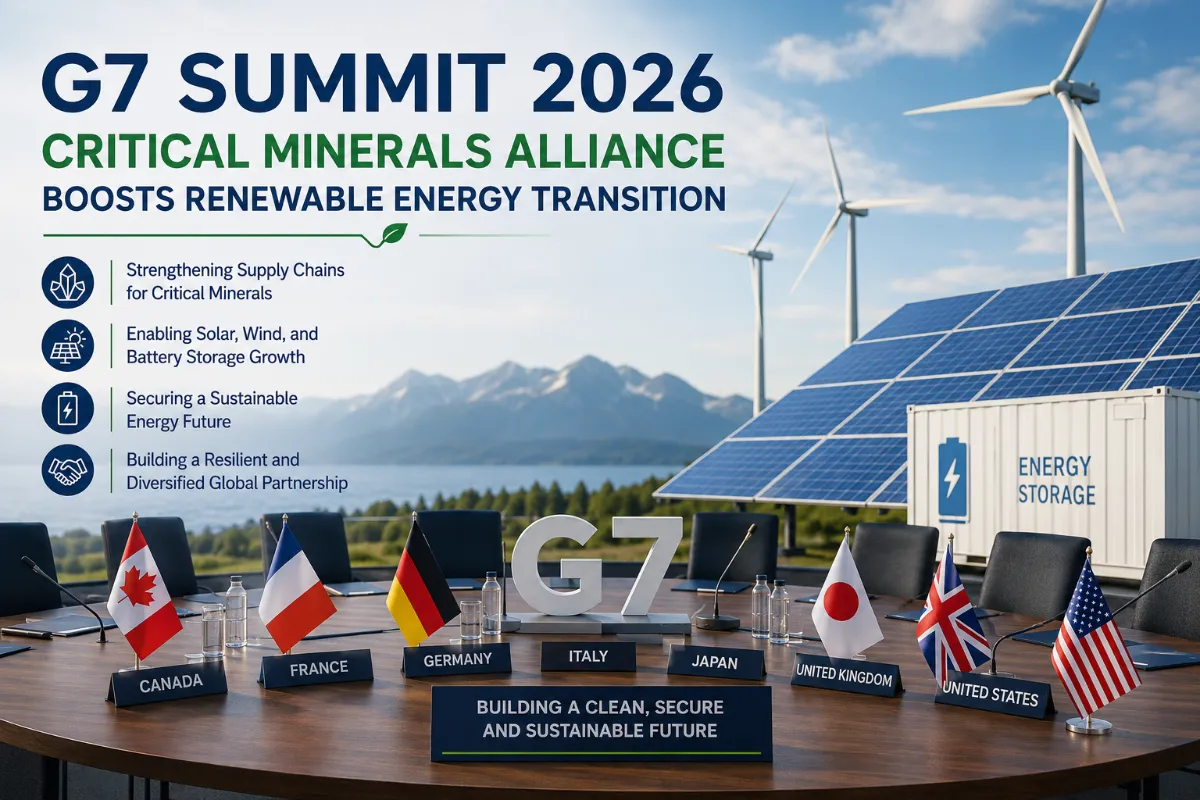
The 2026 G7 Summit has placed renewed attention on the future of renewable energy by emphasizing the importance of secure and resilient supply chains for critical minerals. Leaders from the Group of Seven nations discussed strategies to support the global clean energy transition while reducing vulnerabilities associated with concentrated mineral production and processing.
Although the summit covered a wide range of economic and geopolitical issues, renewable energy emerged as a key topic through discussions on critical minerals, energy security, clean technology manufacturing, battery storage systems, electric vehicles, and solar energy deployment. The outcome is expected to have significant implications for the global renewable energy industry and countries pursuing ambitious clean energy targets.
Critical Minerals at the Center of the Energy Transition
Critical minerals such as lithium, cobalt, nickel, graphite, and rare earth elements play a vital role in modern renewable energy technologies. These materials are used in solar panels, battery energy storage systems, electric vehicles, wind turbines, and advanced power infrastructure.
As global demand for clean energy technologies continues to increase, ensuring stable access to these minerals has become a strategic priority for governments and industry leaders worldwide. The G7 nations recognized that supply chain disruptions could impact renewable energy deployment and increase costs across the clean energy sector.
G7 Launches Critical Minerals Alliance
To address these challenges, G7 leaders announced a new Critical Minerals Resilience and Production Alliance aimed at strengthening international cooperation and improving supply chain security.
The initiative focuses on:
- Expanding investment in critical mineral mining and processing.
- Increasing recycling and resource recovery capabilities.
- Promoting supply chain transparency and traceability.
- Supporting strategic partnerships with mineral-producing nations.
- Reducing overdependence on single-source suppliers.
- Encouraging innovation in clean energy manufacturing.
The alliance is expected to support long-term growth in renewable energy industries while helping nations achieve energy security and climate objectives.
Impact on the Solar Energy Industry
The solar industry depends on reliable supply chains for materials used in photovoltaic modules, inverters, batteries, and grid infrastructure. As countries continue investing in renewable energy projects, demand for critical minerals is projected to grow substantially over the next decade.
Industry analysts believe stronger cooperation among major economies can help stabilize supply chains, reduce market uncertainties, and encourage investment in solar manufacturing capacity. This could benefit solar developers, manufacturers, distributors, and consumers globally.
The initiative may also accelerate research into recycling technologies and alternative materials, helping improve sustainability across the renewable energy sector.
What It Means for India
India remains one of the fastest-growing renewable energy markets in the world, with ambitious targets for solar power, energy storage, green hydrogen, and clean energy manufacturing. Enhanced global cooperation on critical minerals could support India's efforts to strengthen domestic solar manufacturing and reduce dependence on imported components.
India's renewable energy ambitions include expanding solar capacity, improving grid infrastructure, promoting battery storage adoption, and supporting local manufacturing under various government initiatives.
Greater international collaboration on critical minerals may create new opportunities for investment, technology transfer, and supply chain development that support India's long-term energy goals.
Renewable Energy Remains a Global Priority
The discussions at the G7 Summit demonstrate that renewable energy continues to be a major global priority. While climate commitments remain important, leaders are increasingly linking renewable energy expansion with economic competitiveness, industrial growth, energy security, and resilient supply chains.
As the world accelerates the transition toward cleaner energy systems, access to critical minerals will become increasingly important. The G7's latest initiative reflects a growing recognition that secure supply chains are essential for achieving renewable energy and climate goals.
Looking Ahead
The establishment of the Critical Minerals Resilience and Production Alliance marks another step in the evolution of global clean energy policy. By supporting diversified supply chains and encouraging investment in critical mineral infrastructure, G7 nations aim to strengthen the foundations of the renewable energy economy.
For the solar industry, battery manufacturers, renewable energy developers, and policymakers, the outcomes of the G7 Summit 2026 could help shape the next phase of global clean energy growth and innovation.
As demand for solar power and energy storage continues to rise worldwide, initiatives that improve access to critical materials will play an increasingly important role in enabling a sustainable and resilient energy future.









Leave a Reply