
Solar Villages of India: How Microgrids Are Lighting Up the Future
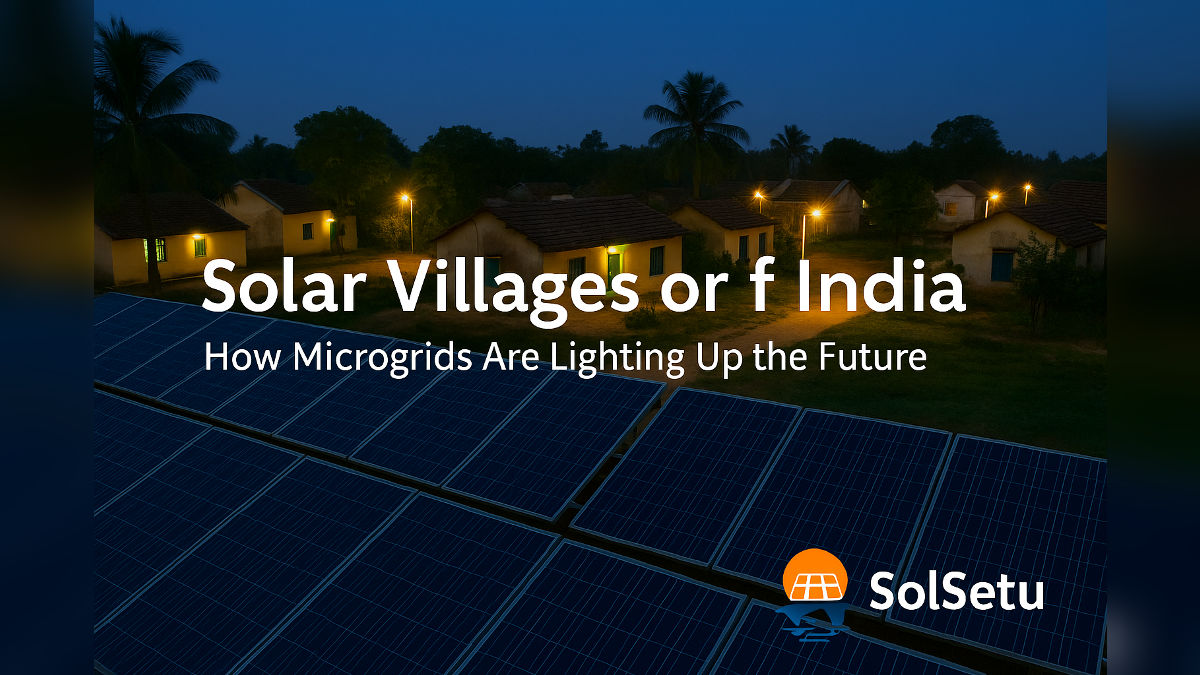
From the deserts of Rajasthan to the mountains of Uttarakhand, solar microgrids are quietly reshaping India’s rural landscape. By powering homes, schools, and small businesses, they are proving that clean energy and rural development can go hand in hand — one “solar village” at a time.
What is a Solar Village?
A solar village is a community that meets most of its electricity needs through decentralized solar power systems — typically solar microgrids or rooftop clusters. These setups combine solar panels, batteries, and local distribution networks to deliver 24×7 power to households and enterprises, independent of or supplementing the main grid.
Government push and public-private pilots
The Ministry of New and Renewable Energy (MNRE) and state nodal agencies have launched programs under the Rural Decentralized Solar Mission to deploy village-level microgrids. Models such as those in Jharkhand, Assam, and Uttar Pradesh — supported by SECI and REC — demonstrate how solar can bridge the rural energy gap.
Stories from the field
- Dharnai, Bihar — The country’s first fully solar-powered village now runs 24-hour electricity through a 100-kW microgrid that supports lighting, shops, and irrigation.
- Paniyara, Uttar Pradesh — Women’s groups operate a microgrid that powers sewing units and cold-storage facilities, providing both income and local employment.
- Leh, Ladakh — Cold climate microgrids ensure schools and health centres have stable heating and power, even in the winter months.
Microgrid economics — sustainable power, sustainable business
Modern solar microgrids run on a mix of grants, community capital, and small usage fees. Digital metering and prepaid payment systems make them financially viable, while AI-based monitoring ensures uptime and remote troubleshooting. As technology costs drop, these projects are increasingly bankable even without large subsidies.
The road ahead
Experts estimate that by 2030, over 10,000 villages could operate on hybrid solar microgrids, significantly reducing grid dependency and fossil fuel use. With DISCOMs partnering on feeder-level solarisation and private EPCs deploying local O&M teams, rural India’s next leap could be powered by sunlight and innovation.
List your solar business or microgrid project on SolSetu



Leave a Reply