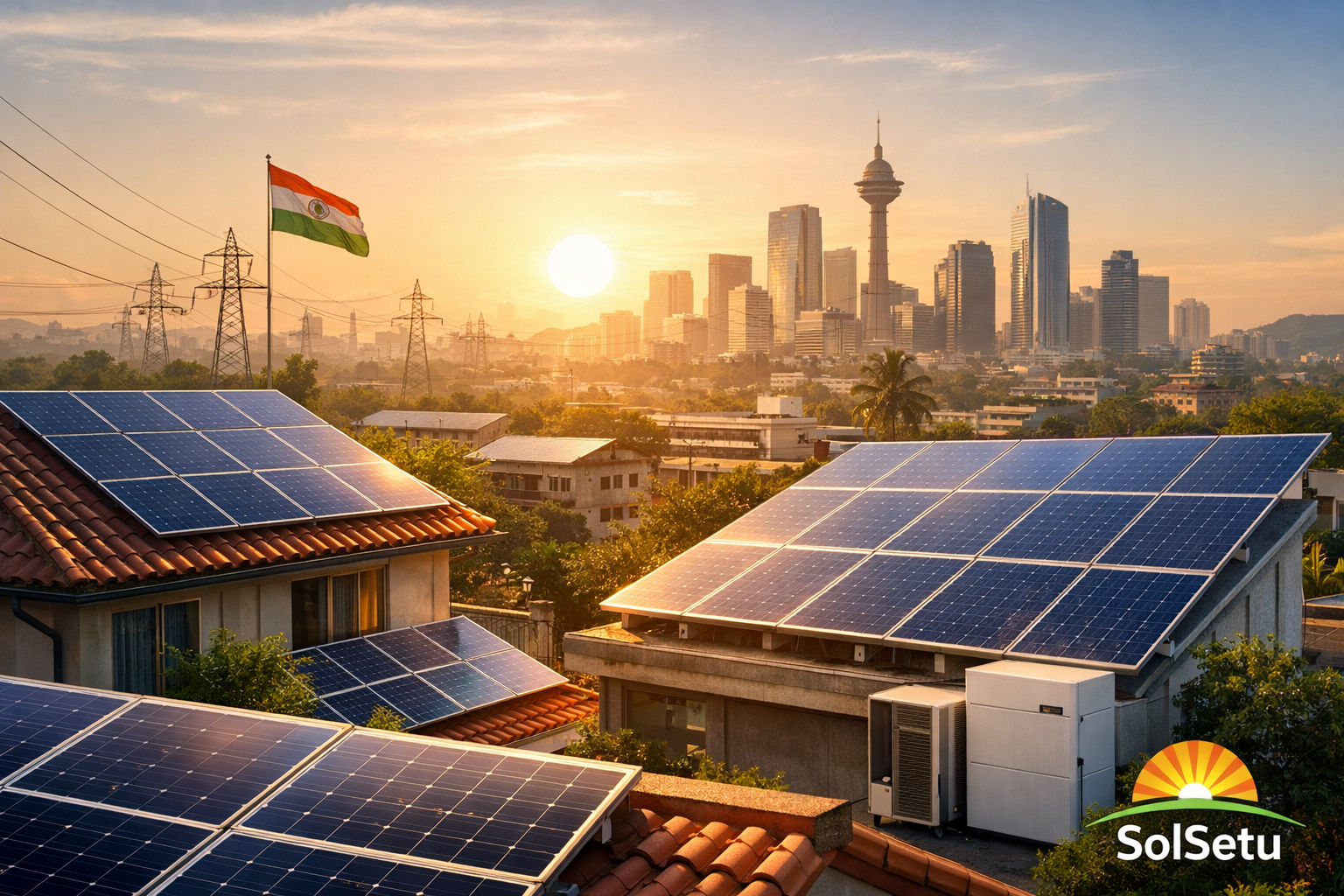
Distributed Solar Energy Becomes the Backbone of India’s Power Transition in 2026
By Girish | Published on 17 February 2026
India’s energy landscape is undergoing a structural transformation in 2026, with distributed solar energy rapidly emerging as a central pillar of the country’s power transition. Unlike traditional utility-scale generation, distributed solar systems are reshaping how electricity is produced, consumed, and managed across residential, commercial, agricultural, and industrial segments.
What Is Driving the Rise of Distributed Solar in India?
Several converging factors are accelerating the adoption of distributed solar energy systems across India. Policy support, falling technology costs, and rising grid reliability concerns have collectively shifted attention away from centralized generation models.
- Declining solar module and inverter costs
- Expansion of rooftop and behind-the-meter solar programs
- Improved net metering and gross metering frameworks
- Growing demand for energy self-sufficiency
- Integration of battery energy storage systems
Rooftop Solar and Storage: A Combined Growth Story
In 2026, rooftop solar installations are no longer viewed as standalone assets. The rapid deployment of solar-plus-storage systems is enabling consumers to reduce grid dependency, manage peak demand, and improve power quality.
Residential users are increasingly adopting lithium-based battery systems, while commercial and industrial consumers are investing in hybrid configurations to mitigate demand charges and ensure business continuity.
Impact on the National Power Grid
Distributed solar is fundamentally altering grid operations. Instead of one-directional power flow, utilities are adapting to a decentralized, bidirectional energy ecosystem where consumers also act as producers.
This shift is encouraging the adoption of smart meters, advanced forecasting tools, and flexible grid management strategies to maintain stability and reliability.
Economic and Environmental Benefits
Beyond energy security, distributed solar systems are delivering measurable economic and environmental benefits:
- Lower electricity costs for end users
- Reduced transmission and distribution losses
- Job creation in installation, operations, and maintenance
- Significant reductions in carbon emissions
The Road Ahead
As India advances toward its long-term climate and energy targets, distributed solar energy is expected to play an even more prominent role. Continued regulatory clarity, grid modernization, and financing innovation will be essential to sustain this momentum beyond 2026.
The evolution of distributed solar is no longer a future projection—it is a defining feature of India’s power sector today.


Leave a Reply