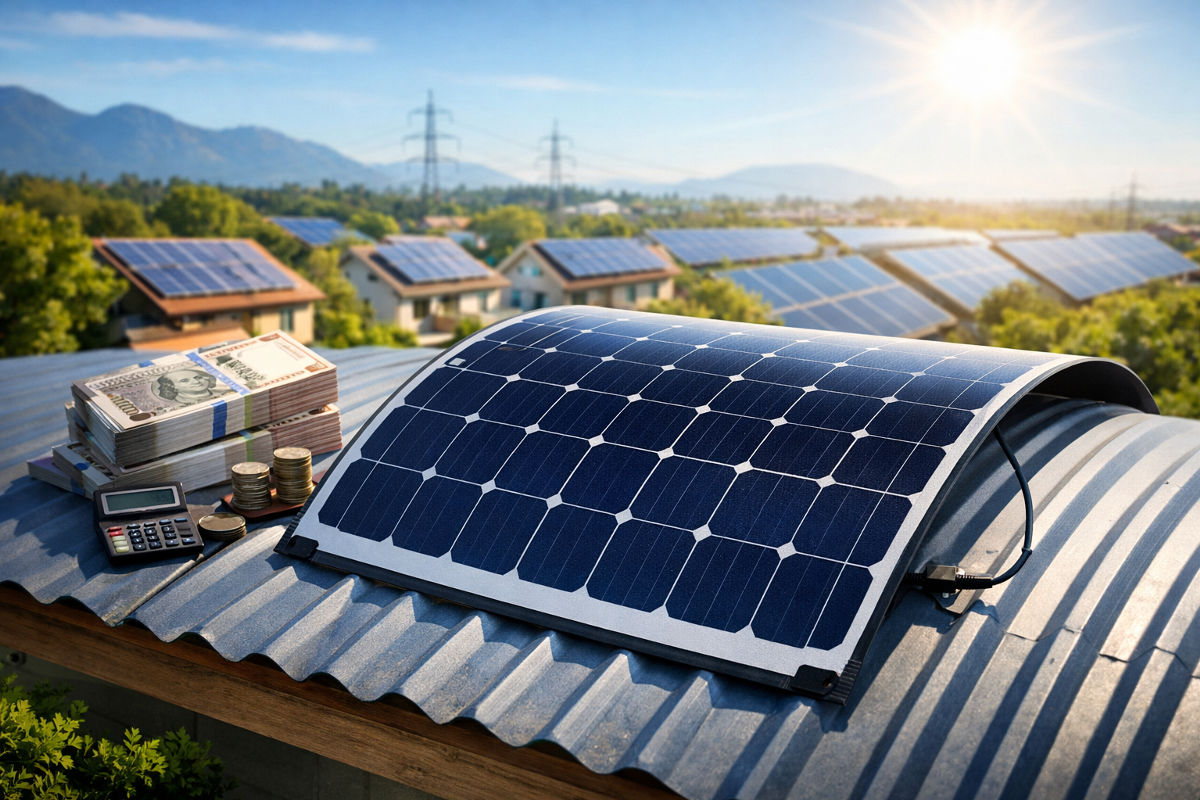
Fact Check | Can a ₹55,000 Flexible Solar System Really Generate 12 Units Daily?
By Girish | February 9, 2026
Opinion & Fact-Check: Viral online articles claiming a breakthrough “flexible solar panel system” linked to India’s largest telecom-backed energy initiatives have generated widespread public attention. The reports suggest that a lightweight, bendable solar setup priced at just ₹55,000 can generate up to 12 units (kWh) of electricity per day.
If accurate, such a system would fundamentally disrupt India’s rooftop solar economics. However, a detailed review of solar engineering benchmarks and current market pricing shows that the claim does not align with present-day technical or economic realities.
What Is Being Claimed?
- Daily electricity generation of 12 units (kWh)
- Flexible, bendable, lightweight solar panels
- Total system price of ₹55,000
- Designed for residential rooftops, tin sheds, and curved structures
- Implied association with large-scale corporate renewable energy initiatives
The Technical Reality: How Solar Generation Works
Under Indian climatic conditions, rooftop solar systems follow a consistent performance pattern:
- 1 kW solar capacity → 4–5 units per day
- 12 units per day → approximately 2.5–3 kW installed capacity
This level of output is typically achieved using high-efficiency rigid mono-crystalline solar panels. Flexible solar panels, while innovative, currently operate at lower efficiency levels (10–18%) compared to rigid panels (20–23%).
In practical terms, panel flexibility improves mounting options, not electricity generation.
Flexible Solar Panels: Real Use Cases
Flexible solar panels are a legitimate technology and are commonly used in:
- Portable and off-grid solar systems
- RVs, boats, and mobile power units
- Temporary installations and lightweight structures
However, industry professionals note that flexible panels typically experience:
- Higher degradation rates in hot climates
- Shorter operational lifespan under continuous exposure
- Lower energy yield per square meter
For permanent residential rooftop generation, rigid panels remain the industry standard.
The Cost Reality Check
As of early 2026, realistic Indian market pricing for a system capable of generating around 12 units per day is outlined below:
| Component | Typical Cost |
|---|---|
| 2.5–3 kW solar panels | ₹90,000 – ₹1.2 lakh |
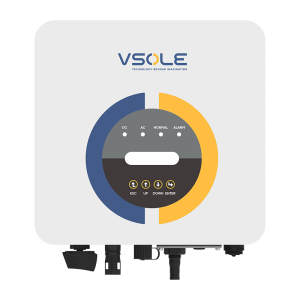
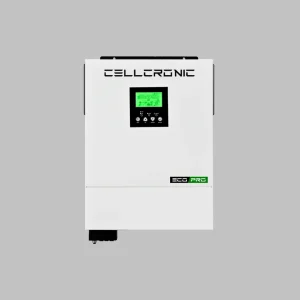
| Inverter | ₹30,000 – ₹45,000 |
| Mounting structure & BOS | ₹20,000+ |
| Installation, wiring & protection | ₹10,000+ |
| Total System Cost | ₹1.5–2 lakh or more |
Even with aggressive pricing or subsidies, ₹55,000 is not sufficient to deliver a complete solar system capable of producing 12 units daily.
⚠️ Consumer Warning
Consumers should approach such claims with caution.
- No officially published technical datasheet supports the claim
- No MNRE-listed or authorized residential product confirms these specifications
- Electricity generation depends on installed capacity, not brand name
- Ultra-low pricing combined with high output is a common red flag
Always request written specifications, realistic generation estimates, warranty details, and installer credentials before investing in any solar system.
Is There Any Official Confirmation?
While major Indian conglomerates have announced large-scale investments in solar manufacturing and clean energy, there is currently no official product launch, regulatory filing, or dealer announcement confirming a flexible residential solar system with the specifications described in viral reports.
Energy analysts caution that unverified brand associations frequently lead to public misinformation.
Opinion: Innovation Must Be Grounded in Accuracy
India’s clean energy transition depends not only on innovation, but also on credible, verifiable information. Flexible solar panels have a role to play, but portraying them as ultra-cheap, high-output replacements for conventional rooftop systems risks misleading consumers.
Until independently verified specifications are released, the claim of a ₹55,000 flexible solar system generating 12 units per day should be viewed as technically improbable and unconfirmed.




Leave a Reply