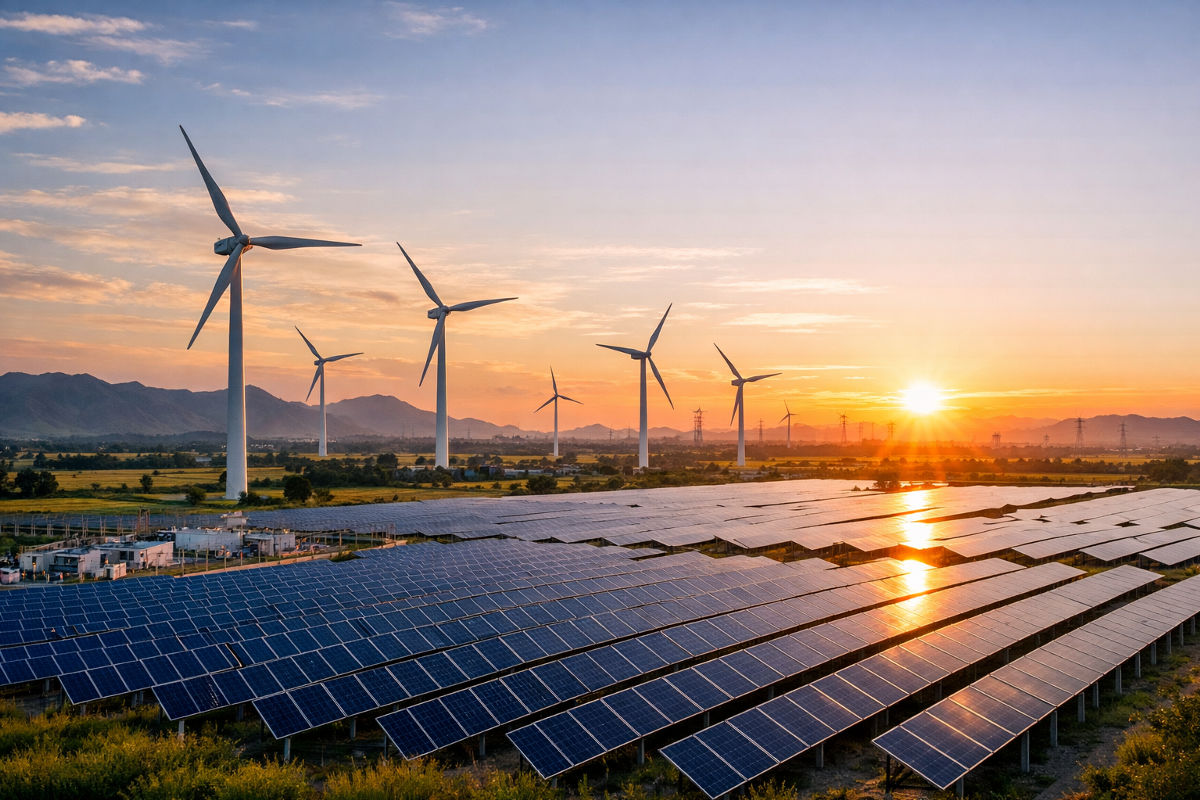
Global renewable energy capacity surges as solar and wind lead growth in 2026
GENEVA — Global renewable energy capacity expanded at its fastest pace in years as new solar and wind projects came online across major economies, signaling a deepening shift away from fossil fuels, Feb. 8, 2026.
The growth was driven by falling technology costs, stronger climate policies and rising demand from utilities and corporations seeking stable, low-carbon electricity. Solar power accounted for the largest share of new capacity, while wind energy followed closely, according to industry analysts.
Asia led global installations, with China and India commissioning large-scale solar parks and onshore wind farms. Europe recorded a surge in offshore wind development, particularly in the North Sea, as governments accelerated energy independence efforts. In the United States, new utility-scale solar projects and battery storage systems helped stabilize power grids strained by extreme weather.
“Renewables are no longer just a climate solution — they are now a cornerstone of energy security and economic competitiveness,” said an energy policy analyst with a Geneva-based research group.
Advances in manufacturing and supply chains have significantly reduced the cost of solar panels and wind turbines, making clean energy projects more attractive even without heavy subsidies. Long-term power purchase agreements signed by technology companies and industrial firms have also provided developers with predictable revenue.
Despite the momentum, challenges remain. Grid congestion, lengthy permitting processes and shortages of skilled labor continue to delay projects in several regions. Analysts warn that without major investments in transmission infrastructure, renewable deployment could slow later in the decade.
Still, projections show renewable sources supplying a growing share of global electricity through 2030. Energy experts say sustained policy support and infrastructure upgrades will be critical to meeting international climate targets while ensuring reliable power for expanding economies.
By Girish







Leave a Reply