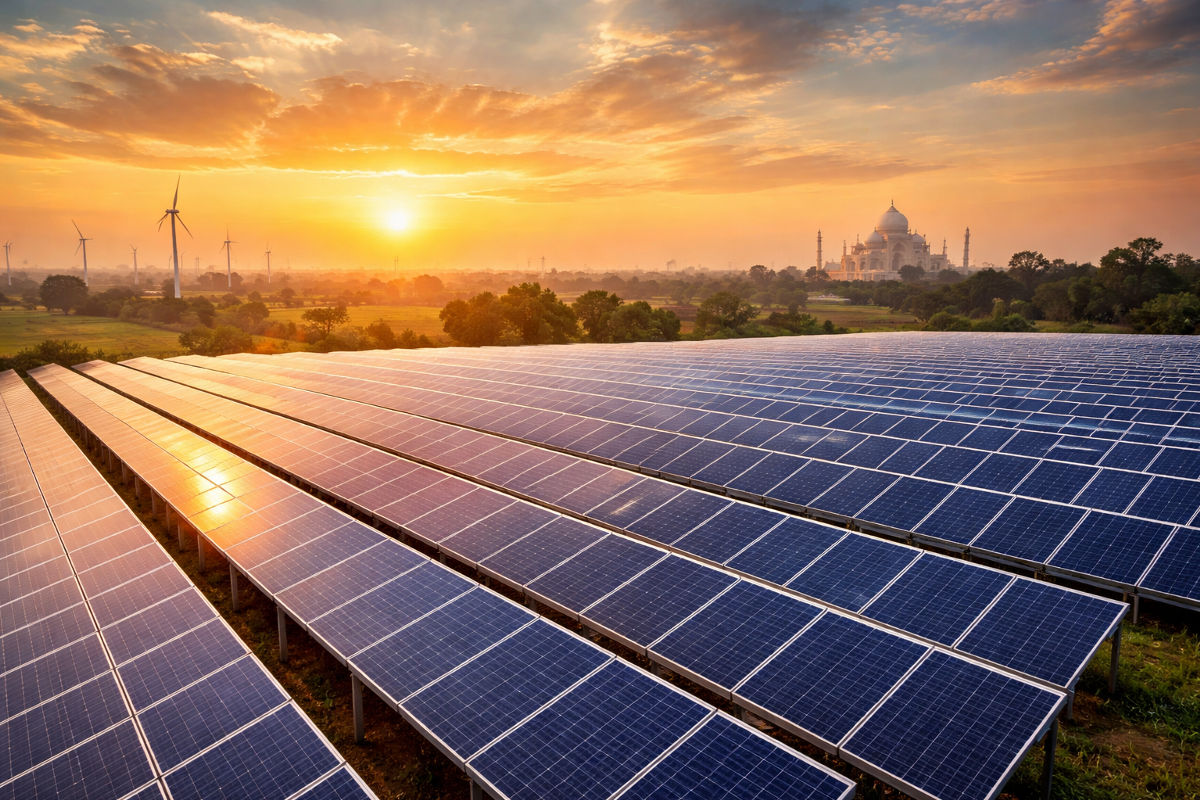
IEA Outlook: Policy Needs for Faster Growth
Published: January 26, 2026 | 05:00 PM (IST)
Author: Girish
The latest outlook from the International Energy Agency (IEA) delivers a clear message to governments worldwide: renewable energy deployment is accelerating, but current policies are still insufficient to meet global climate and energy security targets. Without faster reforms, the pace of clean energy growth will fall short of what is required to achieve net-zero emissions.
Renewables Are Growing — But Not Fast Enough
According to the IEA outlook, solar and wind remain the fastest-growing sources of new electricity capacity globally. Falling technology costs and private-sector investment continue to support expansion. However, policy execution and infrastructure readiness lag behind capacity additions.
The agency warns that renewable capacity must expand at least four times faster by the end of this decade to stay aligned with international climate commitments and long-term energy transition goals.
Grid Infrastructure Emerges as the Critical Bottleneck
One of the most urgent issues highlighted in the IEA outlook is grid readiness. Transmission and distribution networks in many countries were not designed to handle high shares of variable renewable energy.
Delays in grid expansion and permitting have already slowed project commissioning in several markets. Similar challenges are being observed across Asia, Europe, and emerging economies — a concern also echoed in SolSetu’s coverage of large-scale renewable integration in the global power capacity transition .
Policy Reform: From Targets to Implementation
The IEA stresses that many countries now have ambitious renewable energy targets on paper, but weak implementation frameworks undermine progress. Lengthy approval processes, inconsistent regulations, and uncertain market signals continue to delay investments.
The outlook recommends streamlined permitting, long-term power purchase frameworks, and transparent auction mechanisms to provide investor confidence and accelerate deployment.
Energy Storage and Flexibility Take Center Stage
As renewable penetration increases, the IEA highlights energy storage, demand response, and flexible generation as essential enablers of system reliability. Battery storage deployment must grow in parallel with solar and wind to prevent curtailment and price volatility.
These findings align with SolSetu’s international analysis on storage-led transitions, including India’s evolving renewable energy strategy , which emphasizes flexibility as a cornerstone of future power systems.
Investment Gaps in Emerging Economies
While clean energy investment remains strong in advanced economies, the IEA warns of widening gaps in developing regions. High financing costs, currency risks, and limited policy certainty restrict renewable deployment in Africa, Southeast Asia, and parts of Latin America.
Closing this gap will require stronger international cooperation, concessional finance, and risk mitigation instruments to unlock private capital at scale.
Conclusion
The IEA outlook makes it clear that technology alone will not deliver the energy transition. Faster growth in renewables depends on decisive policy action, modernized grids, and coordinated investment in flexibility solutions.
As governments reassess their energy strategies in 2026, the message is unmistakable: the window for incremental change has closed. Accelerated, policy-driven action is now essential to secure a resilient, affordable, and low-carbon global energy system.




Leave a Reply