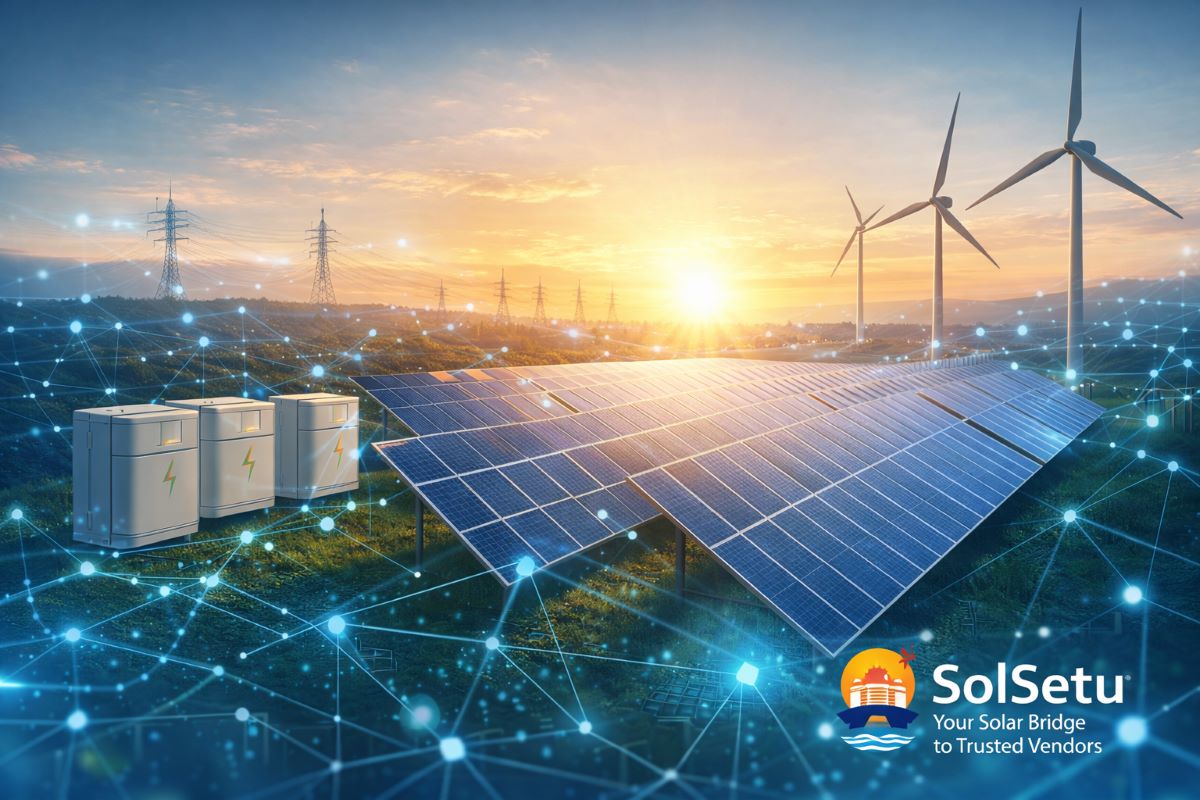
Renewable Energy Enters the Intelligence Era as Grids Transform in 2026
Published: 19 January 2026 | Time: 08:00 AM IST
Author: Girish | Source: SolSetu
Summary: Renewable energy systems worldwide are shifting from capacity-driven growth to intelligence-led integration, marking a structural transformation in how power is generated, stored, and delivered.
Renewable Energy News – January 2026
The global renewable energy sector has reached a critical inflection point in early 2026. While solar and wind installations continue to expand, the defining trend is no longer scale alone. Grid intelligence, energy storage integration, and digital control systems are now reshaping the clean energy landscape.
Across major markets, renewable power plants are increasingly deployed with advanced forecasting tools, AI-enabled monitoring, and automated grid-response mechanisms. These systems allow clean energy assets to react in real time to demand fluctuations, weather variability, and grid congestion—significantly improving stability and efficiency.
Energy storage has emerged as a central pillar of this transition. Utility-scale battery projects are being commissioned alongside solar and wind plants to ensure dispatchable clean power, reduce peak-load stress, and replace conventional fossil-based balancing sources. This evolution is positioning renewables as reliable, round-the-clock energy providers rather than intermittent contributors.
At the distribution level, decentralized energy models are gaining momentum. Rooftop solar, commercial microgrids, and localized storage systems are strengthening energy resilience for cities, industrial parks, and rural regions alike. These distributed assets are reducing transmission losses while enabling consumers to participate directly in energy markets.
From an economic perspective, renewable energy is now a strategic infrastructure asset. Industries are aligning expansion plans with access to stable, low-cost clean power, while governments are prioritizing grid modernization to support long-term energy security and emissions reduction goals.
As 2026 progresses, the success of renewable energy will be measured not just by installed capacity, but by how intelligently it integrates with digital systems, storage technologies, and modern power markets. Clean energy is no longer a supplement to the grid—it is rapidly becoming its foundation.




Leave a Reply