PLI Scheme for Solar Manufacturing: What India’s PLI Means for Cells & Modules
New Delhi — November 17, 2025 — India’s Production Linked Incentive (PLI) programme for high-efficiency solar PV modules is central to the government’s push to build domestic cell and module manufacturing, reduce import dependence and strengthen the local supply chain for large solar projects. :contentReference[oaicite:0]{index=0}
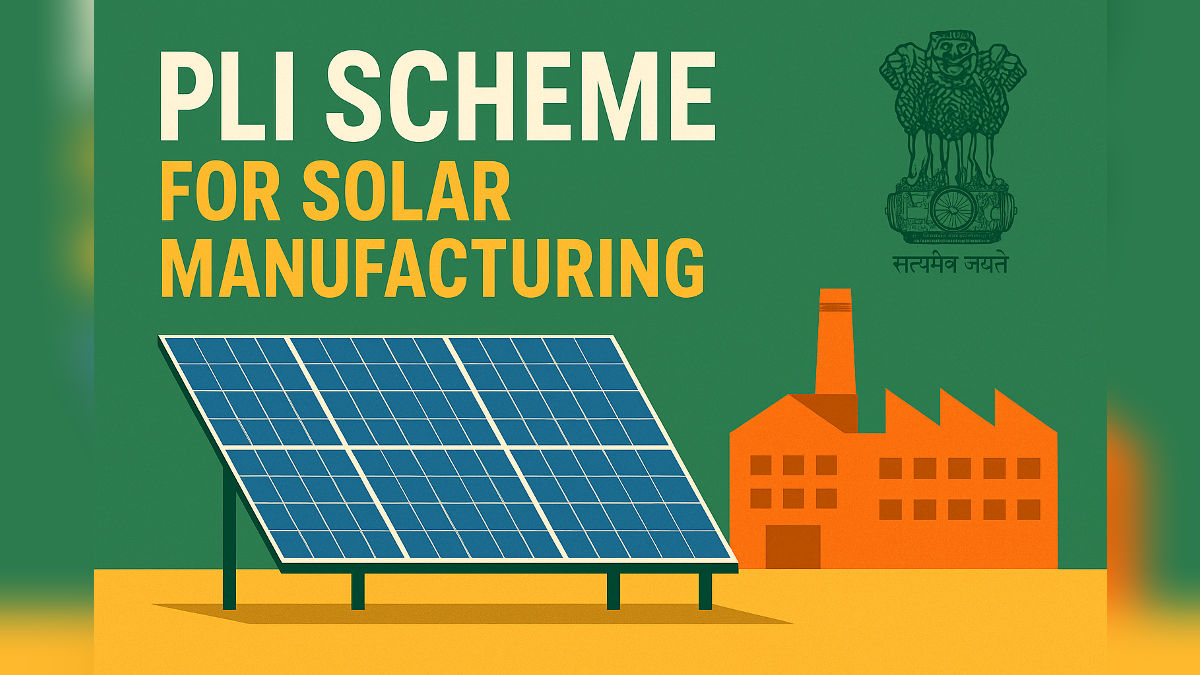
What the PLI offers
The PLI scheme provides financial incentives to selected manufacturers for a fixed period after commissioning, tying payments to actual production of high-efficiency solar PV modules. The incentive structure rewards output, efficiency and domestic value addition — making it more attractive for firms that can source and assemble locally. :contentReference[oaicite:1]{index=1}
Scale and recent commitments
Since launch, the scheme has attracted large investments: government reporting shows committed investments running into tens of thousands of crores and thousands of direct jobs created as projects moved from the bidding stage to construction. As of mid-2025 the government reported committed investments of over ₹48,000 crore under the solar PLI portfolio. :contentReference[oaicite:2]{index=2}
Who won PLI slots and what it means
The auction/selection rounds have named several major industrial groups and dedicated solar manufacturers as awardees — companies that plan to set up multi-GW module capacity. These awards have been adjusted and reallocated in subsequent announcements as companies firm up capacity and funding. For manufacturers, a PLI award typically fast-tracks access to capital and helps secure long-term supply agreements for domestic tenders. :contentReference[oaicite:3]{index=3}
Recent update — timeline extension
To address commissioning delays and supply chain bottlenecks, authorities extended certain PLI deadlines by two years in 2025 — giving manufacturers more runway to complete plants and claim incentives. This extension is intended to improve the scheme’s deliverability amid rapid capacity expansion. :contentReference[oaicite:5]{index=5}
Why vendors, developers and investors should care
- Stronger domestic module supply reduces lead times and import costs for large tenders. :contentReference[oaicite:6]{index=6}
- Manufacturers with PLI backing are more likely to participate in government and DISCOM tenders, stabilising module prices over the medium term. :contentReference[oaicite:7]{index=7}
- Localising value chains creates downstream opportunities for BOS suppliers, junction box and mounting manufacturers, and logistics players. :contentReference[oaicite:8]{index=8}
Quick advice for manufacturers & EPCs
- If you’re a prospective manufacturer: study MNRE/SECI tender documents closely and prioritise domestic value addition to maximise incentive eligibility. :contentReference[oaicite:9]{index=9}
- For EPCs and buyers: map PLI-backed manufacturers in your procurement pipeline — they may offer better pricing and assured delivery timelines once plants commission. :contentReference[oaicite:10]{index=10}



Leave a Reply