
Smart Inverters and AI-Based Controllers: The Brains Behind Modern Solar Plants
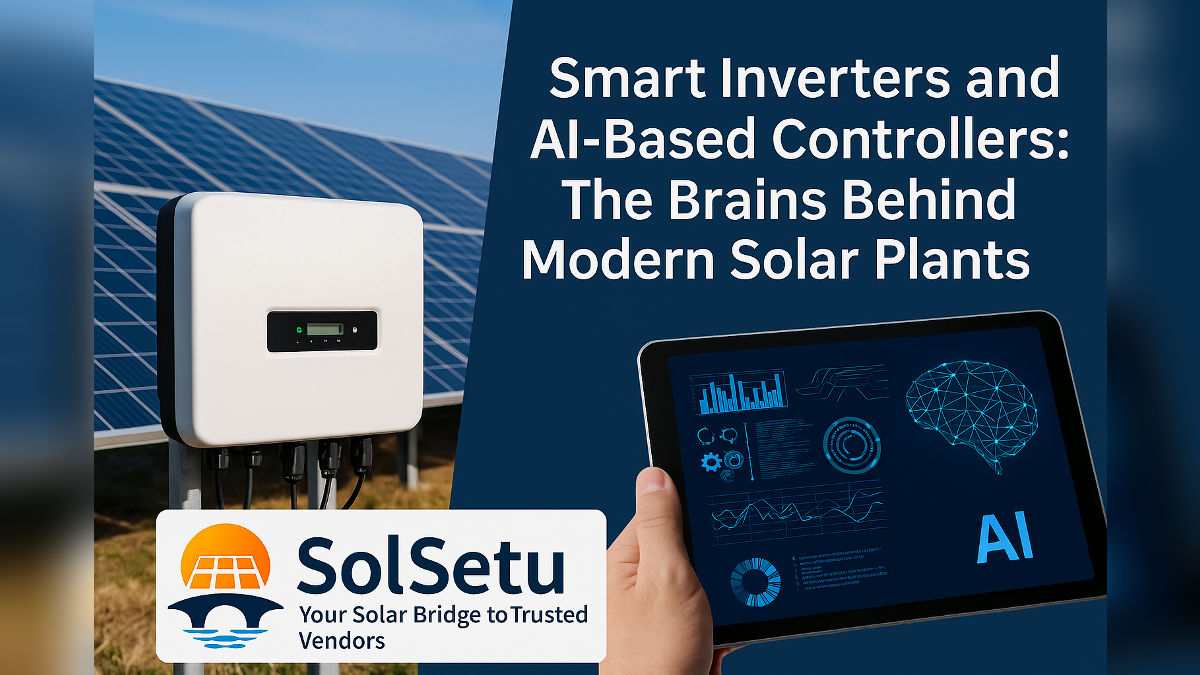
In 2025, smart inverters paired with AI-based controllers are no longer optional add-ons — they are essential for maximising output, stabilising grids, and unlocking revenue streams from grid services. From dynamic voltage support to predictive fault detection, these technologies convert raw PV generation into an intelligent, dispatchable resource.
What makes an inverter “smart”?
Smart inverters do more than convert DC to AC. They actively manage power flows, provide reactive power (Volt-VAR) support, ride-through during grid disturbances, perform frequency response, and can be configured remotely. Modern standards (e.g., IEEE 1547, evolving national interconnection specs) require inverters to participate in grid stabilisation — a game-changer for high-renewable systems.
AI controllers: from monitoring to decision-making
AI-based controllers ingest telemetry (inverter telemetry, string-level meters, weather, and soiling sensors) and run inference models to: identify subtle string mismatches, predict inverter failures, optimise power curtailment schedules, and automate soiling/cleaning operations. The result: higher availability, fewer truck-rolls and better bankability for asset owners.
Key capabilities & benefits
- Grid services: Dynamic reactive power, frequency response, and ramp-rate control enable renewables to provide grid ancillary services previously offered by thermal plants.
- Predictive maintenance: AI flags degradation trends and predicts component failure windows, enabling targeted interventions and reduced downtime.
- Yield optimisation: Coordinated MPPT (maximum power point tracking) across arrays and topology-aware control avoids mismatch losses and recovers yield.
- Fleet orchestration: Centralised AI platforms optimise a fleet’s dispatch across sites and guarantee contractual availability to off-takers.
Implementation checklist for operators
- Standardise telemetry endpoints (timestamps, units, and sampling rates) across inverters, string meters and environmental sensors.
- Deploy edge gateways with lightweight ML models for low-latency anomaly detection and to reduce cloud egress costs.
- Integrate AI alerts with ticketing and mobile dispatch systems for closed-loop O&M workflows.
- Plan inverter configuration templates for reactive power, ride-through and anti-islanding consistent with DISCOM requirements.
Risks, standards & data governance
AI model drift, inconsistent telemetry, and opaque vendor algorithms are real risks. Operators should mandate explainability, versioned model deployment, and secure telemetry pipelines (MQTT/TLS or similar). Aligning with national & international standards ensures safe grid participation and easier regulatory acceptance.




Leave a Reply